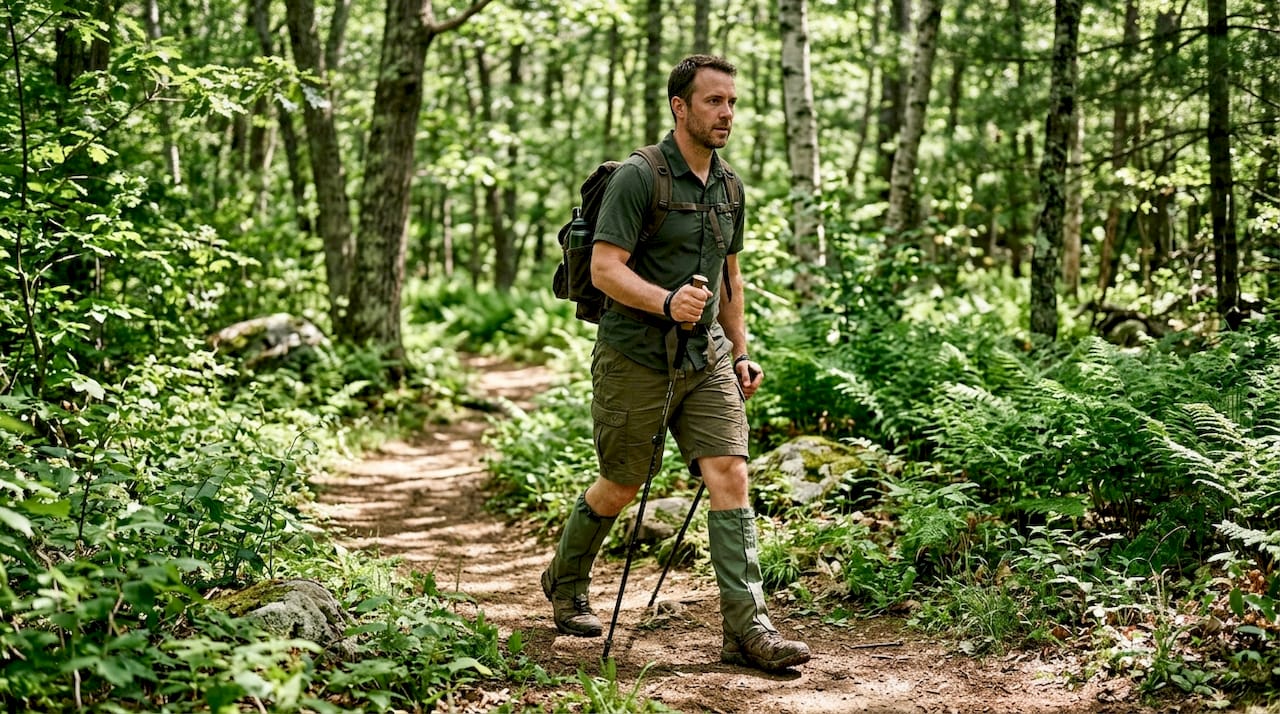
What are the best tick gaiters you can buy right now?
Permethrin-treated gaiters with 3D mesh construction are the strongest performers on the market. They work by doing two things at once: the mesh physically slows tick climbing speed by 4 to 8 times compared to flat woven fabric, and the EPA-registered permethrin treatment knocks ticks down during that extended contact window. The result is a 3.36-times reduction in tick encounters compared to untreated setups. No other gaiter design comes close on that metric.
The three sellers below cover the main buying paths available to U.S. hikers in 2025.
| Seller | Best For | Material and Construction | Tick Repellent Treatment | Durability | Price Range | User Suitability |
|---|---|---|---|---|---|---|
| REI | General hiking and outdoor use | Varied: nylon, packcloth, mesh blends | Insect Shield permethrin on select models | High; carries abrasion-resistant options | $$ – $$$ | All terrains, all seasons |
| Tight Chains Outdoor | Regional tick-heavy zones | Outdoor-specific fabrics suited to regional conditions | Available on select gear | Moderate to high | $ – $$ | Brush, woods, regional trails |
| Neck Gaiter | Lightweight head and neck coverage | Moisture-wicking polyester | Permethrin-treated options available | Moderate | $ (from $2.95) | Summer and winter outdoor use |
Key buying considerations at a glance:
- Prioritize EPA-registered permethrin treatment for lasting protection through at least 50 warm-water washings
- Choose mid-calf height or taller for high-tick-density areas like the Northeast
- Confirm the gaiter seals tightly over the boot tongue and laces
- Match material to terrain: mesh for day hikes, abrasion-resistant packcloth for rugged thru-hiking
- Look for adjustable closures (hook-and-loop or Hypalon straps) that prevent gaps
How to choose the best hiking gaiters for ticks
The single biggest mistake hikers make is buying a gaiter based on looks or price without checking the boot interface. Sealing the gap between gaiter and boot is where most protection is lost. A gaiter that rides up even half an inch off the boot tongue leaves a gap ticks will find.
Material and construction split cleanly by use case. Lightweight mesh gaiters breathe well and work fine for day hikers on groomed trails or open meadows. Abrasion-resistant options, like those built from 420D packcloth or bluesign-approved recycled nylon, hold up in rocky terrain and dense brush where mesh would tear. For thru-hikers, the durability difference matters over hundreds of miles.
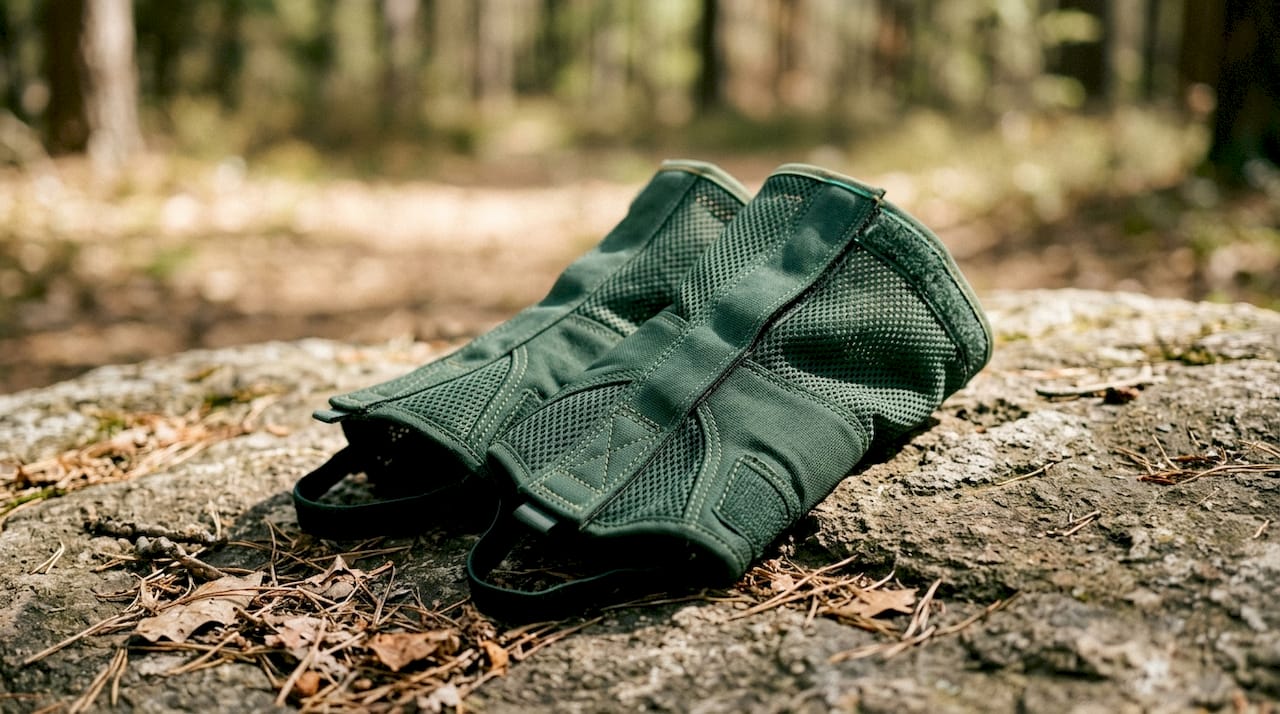
Tick repellent technology is not all equal. Factory-applied, microencapsulated permethrin outlasts DIY spray treatments because the active ingredient is bound to the fabric and released gradually through friction. Look for the EPA registration number on the product label. If it is not there, the treatment has not been independently verified.
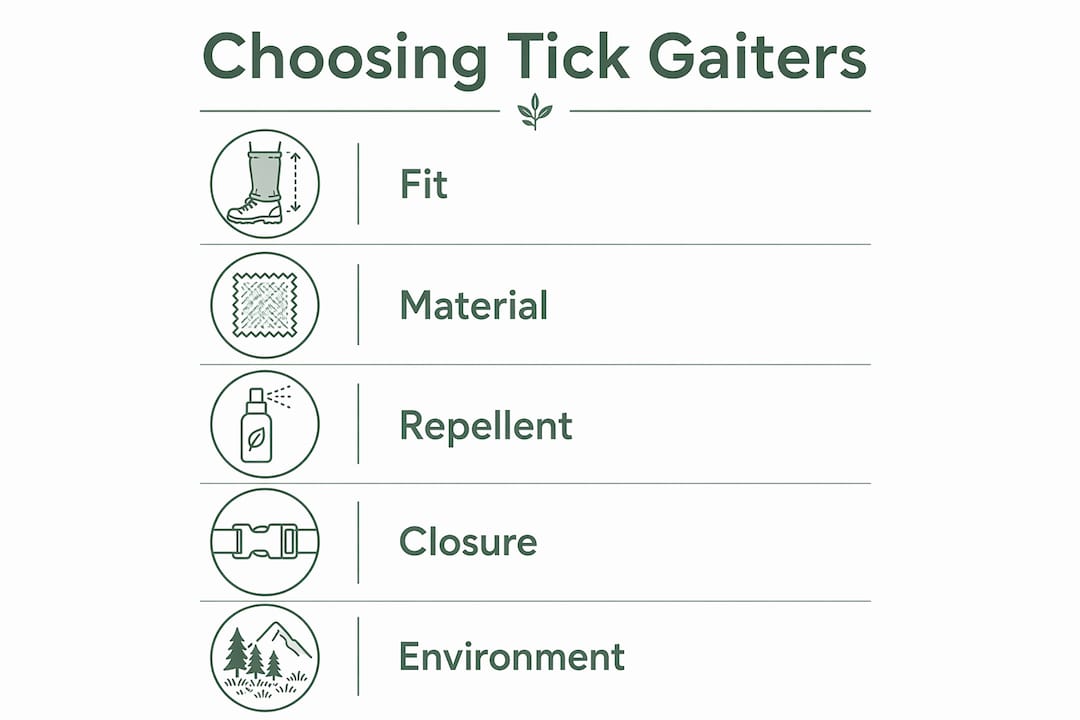
Fit and closure type determine whether the gaiter actually stays put. Hook-and-loop closures are common, but quality varies. A Hypalon instep strap or reinforced boot lace hook keeps the gaiter anchored during active movement. For hikers who wear bulkier pants, check the circumference spec before buying: some “one size fits all” designs run tight over heavy hiking pants.
Environmental factors should drive your final call. Ankle-height gaiters suit Southern trails where ticks concentrate in leaf litter close to the ground. Mid-calf is the minimum for the Northeast and upper Midwest, where tick density in tall grass and brush is higher. For hunters and bushwhackers in dense cover, an integrated gaiter-pant system eliminates the boot interface problem entirely.
Pro Tip: Layer your defense. Permethrin-treated gaiters work best when paired with treated socks and pants. Relying on gaiters alone in high-density tick areas leaves your upper clothing layers unprotected.
How does tick prevention actually work, and why do gaiters help?
Ticks do not jump or fly. They climb from grass, brush, and leaf litter onto footwear or the lower leg, then move upward instinctively in search of skin. That biology is why targeting the lower leg is the highest-leverage point in any tick prevention system.
Research finding: Permethrin-treated gaiters reduce tick encounters by approximately 3.36 times compared to untreated setups, making treated gaiters one of the most effective single additions to an outdoor kit.
The 3D mesh design amplifies that effect by impeding ticks’ movement, causing them to spend more time in the treated zone before progressing upward. Flat woven fabrics give ticks a clear path; 3D mesh does not.
A practical multi-stage defense system looks like this:
- Treat pants and socks with EPA-registered permethrin before heading out
- Wear properly fitted gaiters that seal at the boot interface
- Do a full-body tick check within two hours of returning indoors
- Shower promptly after outdoor activity to dislodge unattached ticks
Common misconceptions are worth addressing directly. Gaiters alone are not a complete solution, and no product can guarantee zero tick bites. The protection comes from the combination of physical barrier, chemical treatment, and consistent post-hike checks.
Historically, indigenous communities used aromatic plants and animal fat mixtures applied to skin and clothing as tick deterrents, though those methods lacked the efficacy of modern permethrin treatments. The underlying logic, creating a hostile surface for ticks to cross, is the same principle behind today’s treated textiles.
Maintenance tips to extend gaiter life:
- Wash in warm water, not hot, to preserve permethrin microencapsulation
- Air dry rather than machine dry to reduce UV and heat degradation
- Inspect hook-and-loop closures after each trip and remove debris that weakens grip
- Replace gaiters after about 50 washings, when permethrin efficacy drops
Where to buy tick gaiters in the U.S.: seller comparison
REI is the broadest option for most hikers. As a verified national outdoor retailer with physical stores across the country, REI carries multiple gaiter styles from brands like Outdoor Research, including the Insect Shield Rocky Mountain High Gaiter II and the Ferrosi Trail Gaiter. The in-store staff can help match gaiter height and closure type to your specific terrain. That hands-on guidance is genuinely useful when you are deciding between ankle and mid-calf options.
Tight Chains Outdoor, based in Kalispell, MT, serves hikers in tick-heavy Northern Rockies terrain. Their selection skews toward gear suited to regional conditions, which means the staff understands the specific tick pressure in brush and wooded areas of that region. For hikers in the Mountain West, a local specialist who knows the terrain is worth more than a generic national catalog.
Neck Gaiter takes a different angle entirely. Their focus is tubular headwear and neck protection, with moisture-wicking and odor-control fabrics at accessible price points starting at $2.95 per gaiter. Bulk purchase options make them practical for group outings or families. They are not a tick-specific gaiter in the traditional lower-leg sense, but permethrin-treated neck gaiters add a useful layer of protection for exposed skin above the collar.
Buyer trust factors to verify before purchasing from any seller:
- Confirmed physical or verified online presence in the U.S.
- EPA registration number visible on permethrin-treated products
- Clear return or exchange policy
- Customer reviews that specifically mention tick protection performance, not just comfort
| Seller | Physical Store | Online | Bulk Options | Shipping |
|---|---|---|---|---|
| REI | Yes (nationwide) | Yes | No | Standard |
| Tight Chains Outdoor | Yes (Kalispell, MT) | Yes | — | Regional |
| Neck Gaiter | No | Yes | Yes | Free over a set amount |
Bugawaygear offers a chemical-free alternative to treated gaiters
If permethrin is a dealbreaker for you, whether because of skin sensitivity, concerns about chemical exposure around children, or a preference for eco-responsible gear, Bugawaygear takes a fundamentally different approach.

Rather than treating fabric with insecticides, Bugawaygear’s tick-proof clothing uses ultra-fine breathable mesh as a physical barrier. Ticks cannot penetrate the mesh, so there is no chemical contact required. The line includes jackets, pants, and combo sets sized for men, women, and kids, with integrated foot coverage that addresses the boot interface problem without relying on a separate gaiter at all. Every product is 100% chemical-free, backed by a 30-day money-back guarantee, and built from eco-responsible materials. For hikers, gardeners, and families who want real protection without any insecticide on their skin or clothing, Bugawaygear is the clearest option in that category.
Key Takeaways
The most effective tick gaiters combine EPA-registered permethrin treatment with a 3D mesh structure that slows tick climbing, seals at the boot interface, and maintain effectiveness through repeated washings.
| Point | Details |
|---|---|
| 3D mesh slows tick climbing | Ticks move 4 to 8 times more slowly on 3D mesh than flat fabric, increasing repellent contact time. |
| Permethrin treatment lasts | EPA-registered microencapsulated permethrin is designed to maintain effectiveness through at least 50 warm-water washings. |
| Boot interface is critical | Sealing the gap between gaiter and boot is the primary vulnerability point in any tick protection setup. |
| Match gaiter to terrain | Mesh suits day hikes; abrasion-resistant packcloth handles rugged brush and thru-hiking conditions. |
| Bugawaygear: chemical-free option | Bugawaygear’s mesh clothing physically blocks ticks without permethrin, backed by a 30-day money-back guarantee. |