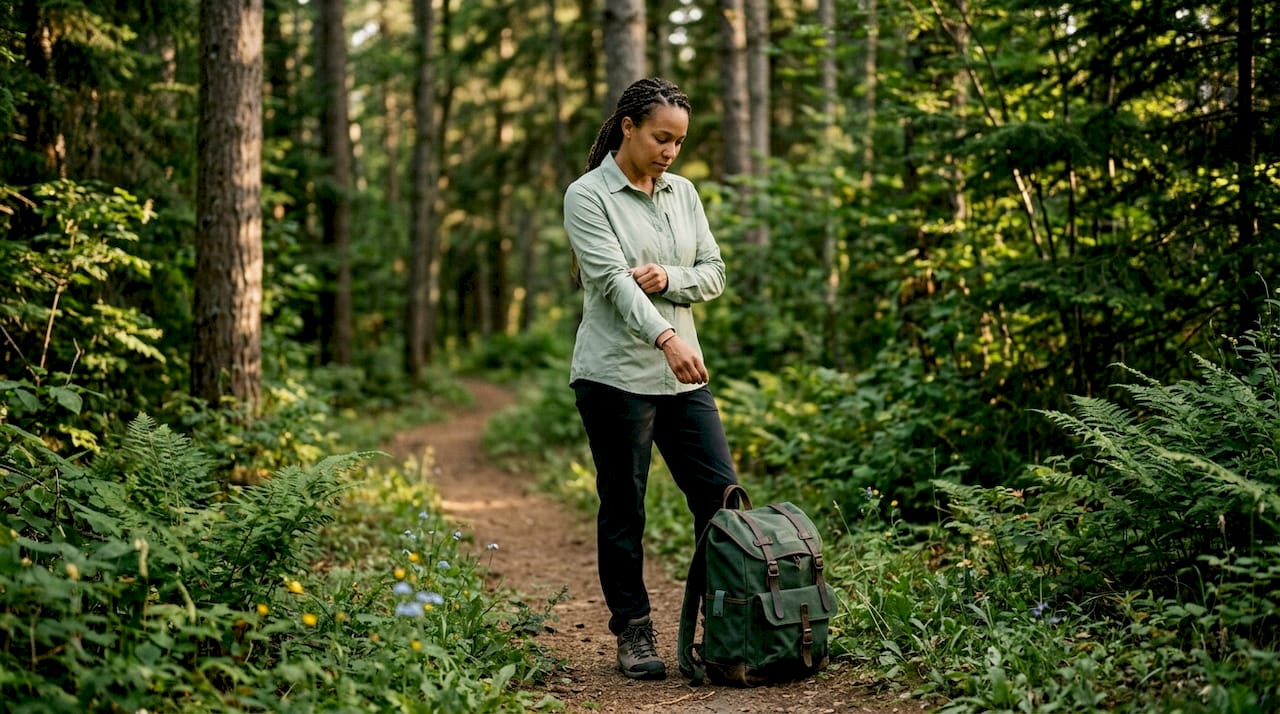
Mosquitoes bite through clothing when fabrics are thin, tight, or stretched against the skin. This is not a rare edge case. Thin materials like leggings and fitted tops are among the most common clothing items that allow mosquito penetration, because the fibers stretch and create micro-gaps just wide enough for a mosquito’s proboscis. Knowing which fabrics fail and which hold up is the first step toward real protection. Combine that knowledge with permethrin treatment and a few behavioral habits, and you can cut your bite risk dramatically.
How do mosquitoes bite through clothing?
A mosquito’s proboscis is a needle-like mouthpart thin enough to thread through gaps in loosely woven or stretched fabric. The insect does not chew through cloth. It finds an opening and slides through.
Fabric weave tightness matters more than fabric weight. A loosely woven heavy linen can offer less protection than a tightly woven lightweight synthetic. That surprises most people, who assume thicker automatically means safer.
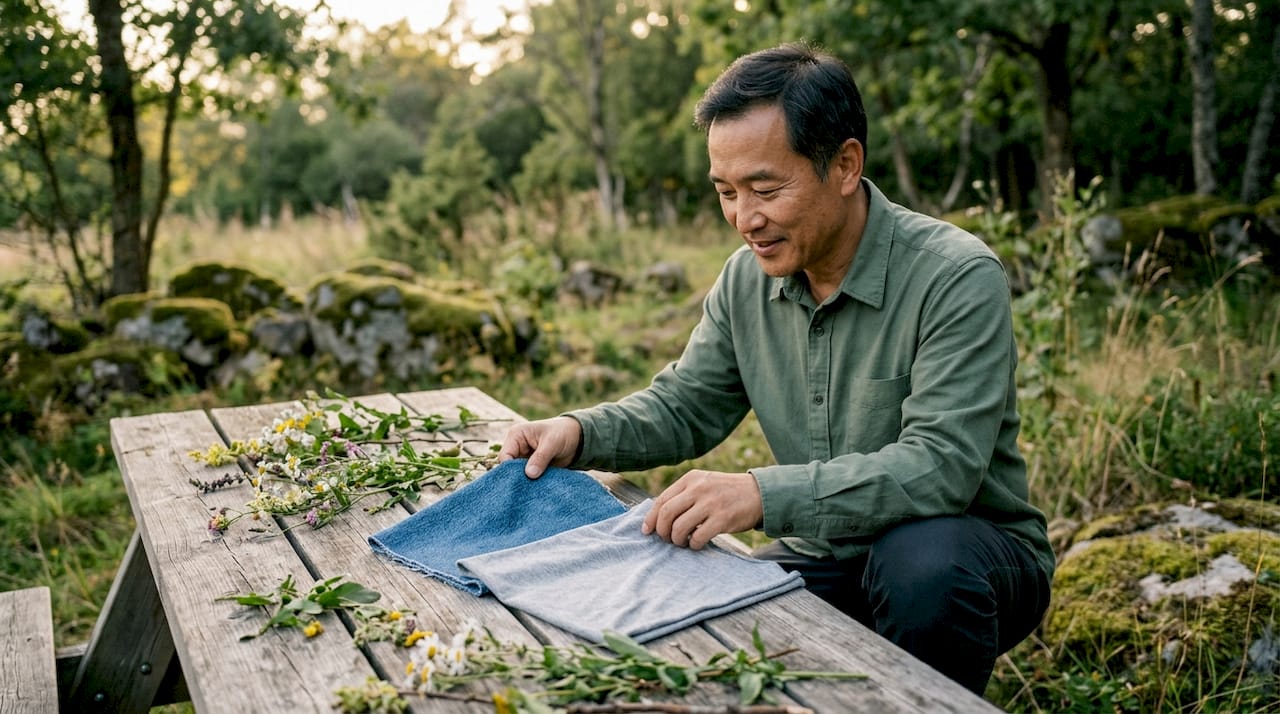
Tight and stretchy fabrics create the biggest problem. When you wear leggings, compression tights, or a fitted cotton t-shirt, the fabric presses directly against your skin. That contact eliminates the air gap that would otherwise block the proboscis. Spandex blends and jersey knits are especially vulnerable because they stretch across joints like knees and elbows, pulling fibers apart with every movement.
Sweat and movement spread fabric fibers apart, increasing bite risk further. A dry, loose shirt offers more protection than the same shirt soaked through after an hour of hiking. Moisture changes the fabric’s structure and brings it closer to the skin.
Pro Tip: Change out of sweat-soaked clothing during breaks on long outdoor trips. Dry, loose fabric is your best passive defense against bites.
Here is a quick breakdown of the factors that raise your risk:
- Fabric fit: Tight clothing presses fibers against skin, eliminating the protective gap.
- Fabric stretch: Spandex, jersey, and similar blends open micro-gaps when stretched.
- Moisture: Sweat collapses fabric structure and increases skin contact.
- Weave looseness: Open-weave fabrics like gauze or loose linen allow direct proboscis access.
- Movement: Repeated bending at knees, elbows, and shoulders pulls fibers apart temporarily.
Which fabrics best prevent mosquito bites?
Loose-fitting clothing is superior because tight clothing presses fibers against skin, making mosquito penetration easier. The goal is to maintain an air gap between the fabric and your skin at all times.
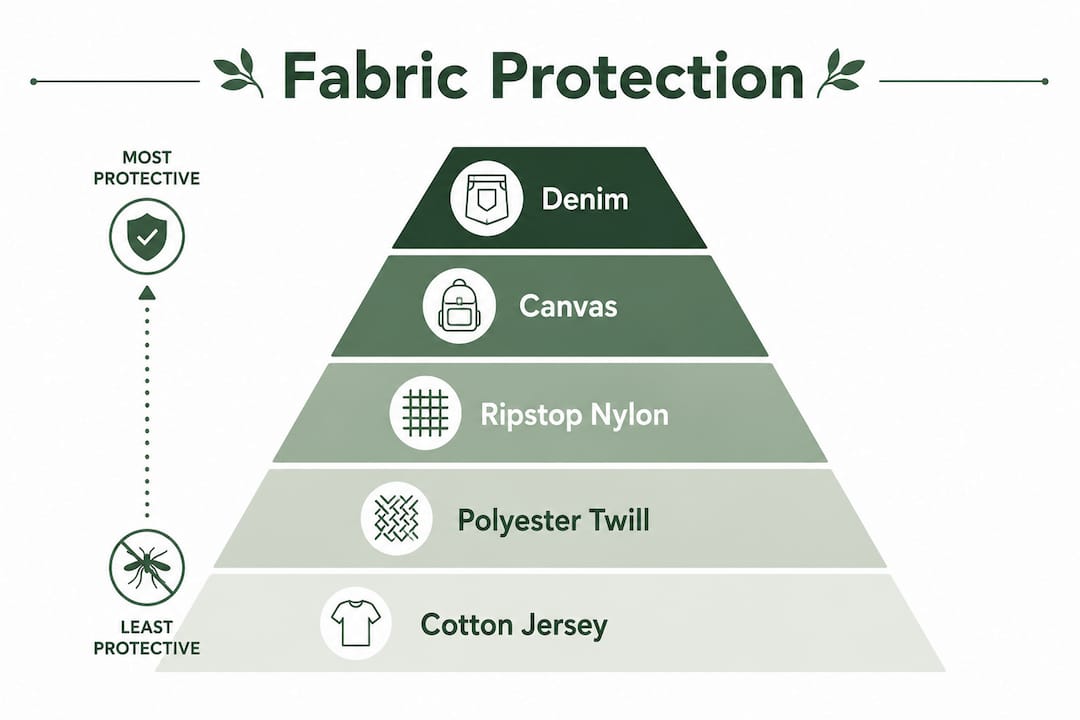
Fabric types ranked by protection
Denim and canvas sit at the top. Both are tightly woven, relatively stiff, and hold their structure even when wet. A pair of denim jeans provides far better protection than yoga pants made from a spandex blend, even though the jeans feel heavier.
Tightly woven synthetics like ripstop nylon and polyester twill also perform well. These fabrics are used in outdoor and military gear precisely because they resist insect penetration while staying lightweight. The key is weave density, not fiber type.
Thin cotton and jersey knits sit at the bottom. A standard cotton t-shirt offers minimal protection when fitted. Thin cotton stretches, absorbs sweat quickly, and clings to skin. Jersey fabric behaves similarly.
Color also plays a role. Dark-colored clothing retains more heat and creates higher visual contrast, attracting more mosquitoes compared to light-colored fabrics. Light colors like white, tan, and pale gray are the better choice for outdoor activity.
| Fabric type | Weave tightness | Fit risk | Protection level |
|---|---|---|---|
| Denim | Very tight | Low (stiff) | High |
| Ripstop nylon | Tight | Low | High |
| Canvas | Very tight | Low | High |
| Loose linen | Loose | Low | Moderate |
| Thin cotton | Moderate | High (clings) | Low |
| Jersey knit | Loose when stretched | Very high | Very low |
| Spandex blend | Open when stretched | Very high | Very low |
Layering adds protection even when individual garments are thin. Two layers of loose fabric create a combined barrier that is harder for a proboscis to cross. This is why long-sleeved shirts worn over a base layer outperform a single fitted long-sleeve top.
Does permethrin-treated clothing stop mosquito bites?
Permethrin is a synthetic insecticide derived from chrysanthemum flowers. Applied to fabric, it repels and kills mosquitoes on contact rather than just blocking them physically. Factory-treated garments maintain effectiveness through over 70 wash cycles, making them a long-term investment rather than a one-time fix.
The effectiveness numbers are significant. Permethrin-treated long-sleeved shirts and pants reduce mosquito bites by up to 91%. That level of protection exceeds what any untreated fabric can achieve on its own.
How permethrin works
- Contact kill: Mosquitoes that land on treated fabric absorb permethrin through their legs and die or are repelled before biting.
- Residual effect: The treatment stays active in the fabric fibers, not on the skin surface.
- Layered defense: Permethrin works alongside physical fabric barriers, not instead of them.
- Wash durability: Factory-treated garments hold potency far longer than at-home spray applications, which typically last 5–6 washes.
Safety is a common concern. The EPA reviewed studies and found no health risks from wearing permethrin-treated clothing for adults or children. The treatment is also considered safe during pregnancy. One real precaution: permethrin is toxic to cats when wet, so keep treated garments away from cats until fully dry.
At-home permethrin sprays are available and work well for treating existing clothing. They are less durable than factory treatments but still provide meaningful protection for a season of outdoor use. Apply to the outside of garments, let dry completely, and reapply after every 5–6 washes.
Pro Tip: Buy factory-treated garments when possible. The 70-plus wash cycle durability makes them far more cost-effective than repeated at-home spray applications.
Practical tips to maximize protection while outdoors
Physical clothing choices get you most of the way there. Behavioral habits close the remaining gaps.
Tucking pants into socks and shirts into pants reduces odor release and eliminates entry points at cuffs and waistbands. Mosquitoes follow scent trails to exposed skin. Sealing those openings cuts off the path.
Combining treated clothing with EPA-registered topical repellents like DEET or Picaridin on exposed skin gives you the strongest possible defense. No single measure beats a combination strategy. Treated clothing handles covered areas; repellent handles your face, neck, and hands.
Additional habits worth building:
- Avoid peak mosquito hours. Dawn and dusk bring the highest mosquito activity. Schedule outdoor work and recreation outside those windows when possible.
- Change sweat-soaked clothing. Wet fabric clings to skin and loses its protective structure. A dry change of clothes mid-hike is worth carrying.
- Use spatial repellents at camp. Citronella candles and clip-on repellent fans reduce ambient mosquito pressure around a fixed location.
- Check for gaps at wrists and ankles. These are the most common entry points that people overlook when dressing for outdoor activity.
The combination of tightly woven fabric, permethrin treatment, sealed openings, and topical repellent on exposed skin creates a layered defense that is genuinely hard for mosquitoes to beat.
Key Takeaways
Mosquito bite prevention through clothing depends on fabric weave tightness, fit, permethrin treatment, and behavioral habits working together as a system.
| Point | Details |
|---|---|
| Thin and tight fabrics fail | Leggings, jersey knits, and spandex blends allow mosquito penetration through micro-gaps. |
| Weave tightness beats fabric weight | Tightly woven synthetics outperform loosely woven heavy fabrics like gauze or open linen. |
| Permethrin cuts bites by up to 91% | Factory-treated garments stay effective through 70-plus wash cycles for long-term protection. |
| Loose fit creates a protective gap | Clothing that does not press against skin blocks the proboscis from reaching the surface. |
| Combination strategies work best | Treated clothing plus EPA-registered repellents on exposed skin outperforms any single measure. |
What I’ve learned from years of watching people dress for the outdoors
The most common mistake I see is treating clothing as a binary. People assume they are either protected or not, based on whether they are wearing long sleeves. That thinking misses the point entirely.
A fitted long-sleeve athletic shirt in a spandex blend offers almost no protection. The fabric stretches across the shoulders and elbows with every movement, and sweat makes it cling within the first 20 minutes. I have watched people come back from a trail covered in bites through exactly that kind of shirt, genuinely confused because they thought they were covered.
The second mistake is ignoring permethrin because it sounds like a chemical they do not want near their skin. The EPA safety record on this is clear. Permethrin stays in the fabric, not on your skin. The risk profile for wearing treated clothing is genuinely low, and the protection it adds is real.
What actually works is simple: loose fit, tight weave, light color, permethrin treatment, and sealed cuffs. None of those steps is complicated. Together, they create a system that holds up through a full day outdoors. The people who combine all five consistently come back without bites. The people who pick one or two often do not.
— Thomas
Gear built for real outdoor protection
Clothing choice is one of the most effective tools you have against mosquito and tick bites. Bugawaygear builds outdoor protective clothing specifically for people who spend real time outside, including hikers, campers, gardeners, and outdoor workers.

Bugawaygear products use 100% chemical-free materials and create a physical barrier against insects without relying on sprays or topical treatments. The garments are lightweight, designed for all-day wear, and backed by a 30-day money-back guarantee. Over 500 customers have reported zero tick bites while wearing Bugawaygear in the field. If you want protection that does not depend on remembering to reapply a spray, this is the place to start.
FAQ
Can mosquitoes bite through leggings?
Yes. Leggings are among the most vulnerable garments because the spandex blend stretches against the skin, creating micro-gaps that a mosquito’s proboscis can penetrate. Loose-fitting pants with a tighter weave offer significantly better protection.
Does fabric color affect mosquito attraction?
Dark-colored clothing retains more heat and creates higher visual contrast, which attracts more mosquitoes. Light colors like white, tan, and pale gray reduce both heat retention and visual attraction.
How long does permethrin treatment last on clothing?
Factory-treated garments maintain effectiveness through over 70 wash cycles. At-home spray applications last approximately 5–6 washes before reapplication is needed.
Is permethrin-treated clothing safe for children?
The EPA reviewed available studies and found no health risks from wearing permethrin-treated clothing for adults or children. The one precaution is keeping treated garments away from cats until fully dry, as permethrin is toxic to cats when wet.
What is the most effective way to prevent mosquito bites outdoors?
Combining permethrin-treated clothing, loose-fitting tightly woven fabrics, EPA-registered repellents like DEET or Picaridin on exposed skin, and behavioral habits like tucking pants into socks provides the strongest protection available.