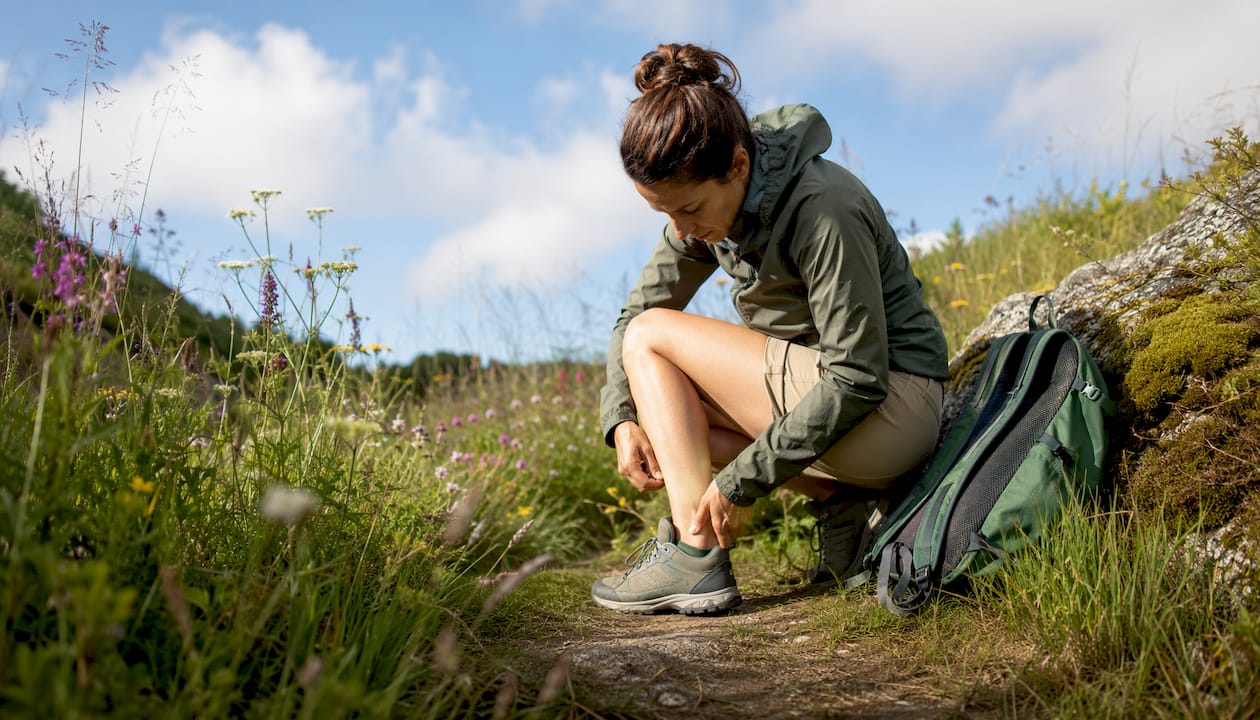
A clothing-first physical barrier is the most reliable chemical-free way to prevent chigger bites. According to Texas A&M AgriLife Extension and UCLA Health, once larvae inject their enzymes into your skin, the reaction is already in motion. The only winning move is stopping contact before it starts.
Before you go:
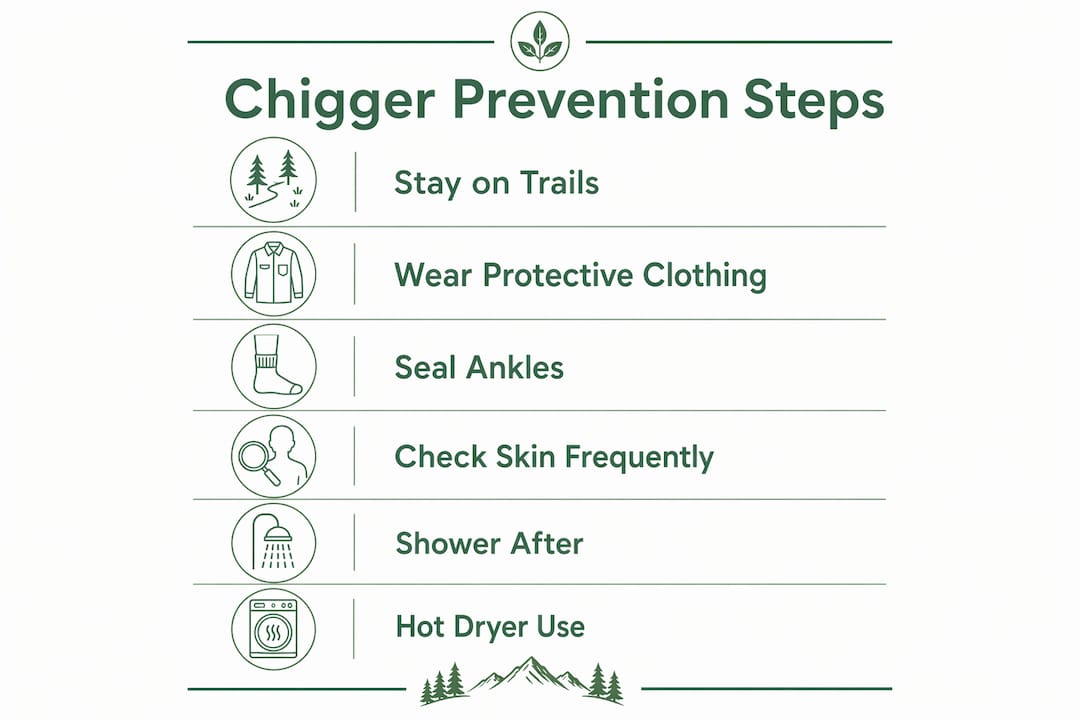
- Wear long pants and long sleeves in tightly woven fabric
- Seal every gap: tuck pants into socks, close cuffs, and lace boots high
- Pick light colors so you can spot mites before they reach your skin
During activity: Stay on cleared trails, avoid sitting on bare ground, and check exposed skin every 20–30 minutes.
When you get home: Strip off clothing immediately, run it through a hot dryer, then shower and scrub with soap and a washcloth.
The verdict: chemical-free, clothing-first protection works because it stops the bite from happening at all.
Table of Contents
- Why chigger bites happen and what that means for prevention
- Where and when you’re most likely to pick up chiggers
- Chemical-free prevention: what to do before, during, and after
- How to choose and use protective clothing effectively
- Simple yard and pet steps that reduce chigger habitat
- What to do if you think you’ve been bitten
- Common myths that can make things worse
- Key Takeaways
- Why clothing-first protection is the right call
- Zero-chemical protection that actually fits the way you move
- Useful sources
Why chigger bites happen and what that means for prevention
Chiggers are the larvae of Trombicula mites, barely visible to the naked eye. They do not burrow into skin. Instead, they pierce the surface, inject digestive enzymes that liquefy tissue, and feed on the resulting fluid. The intense itch you feel hours later is your body reacting to those enzymes, not to the mite itself.
U.S. chiggers are not disease vectors. UCLA Health confirms that chiggers in the United States do not carry or transmit diseases to humans. Prevention is entirely about comfort, not infection risk.
That biological detail has a direct practical implication. Because the reaction is to injected enzymes, no home remedy applied after the bite can reverse it. Texas A&M AgriLife Extension puts it plainly: prevention relies on clothing barriers and prompt washing. Once the larvae have fed, the deal is done.
Where and when you’re most likely to pick up chiggers
Habitats and transfer points
Chiggers favor transition zones: the edge where a mowed lawn meets tall grass, overgrown creek banks, brushy trail margins, and leaf-litter piles. They wait on low vegetation and climb onto a passing host from the ground up. That upward movement explains why ankles, sock lines, waistbands, armpits, and the backs of knees are the most common bite sites.
| Setting | Risk level | Key reason |
|---|---|---|
| Trail edges and tall grass | High | Dense vegetation, shade, moisture |
| Creek and pond margins | High | Warm, humid microclimate |
| Overgrown garden beds | Moderate–high | Undisturbed soil and leaf litter |
| Mowed lawn (dry, sunny) | Lower | Heat and sun reduce survival |
| Shaded, moist lawn corners | Moderate | Patchy infestations possible |
Seasonality
AgriLife Today notes that chigger season in Texas typically runs from late spring through early fall, driven by warm temperatures and humidity. Across the broader U.S., peak activity generally falls during warm months, with the worst weeks often coming after rain.
Pro Tip: A well-kept lawn is not automatically safe. Texas A&M AgriLife warns that chigger distribution is patchy and unpredictable — even manicured grass can harbor mites under the right moisture and temperature conditions. Dress for the risk, not for how the yard looks.
Chemical-free prevention: what to do before, during, and after
Before you go
- Choose tightly woven fabrics: denim, canvas, or fine-mesh technical fabrics block larvae better than loose knits or open weaves.
- Wear long pants and long sleeves, even in warm weather. Lightweight, breathable options make this realistic.
- Pick light-colored clothing so you can spot tiny orange or red mites moving on fabric.
- Select closed-toe shoes or boots with high ankle coverage.
- Tuck pants into socks and close all cuffs before stepping off a paved surface.
During activity
- Stay on the center of cleared trails and avoid brushing against vegetation.
- Never sit directly on bare ground, logs, or leaf piles; use a tarp or camp chair.
- Check skin and clothing at rest stops, especially around ankles and waistbands.
After activity
- Remove and bag outdoor clothing before entering your home.
- Tumble-dry on high heat: heat kills chiggers on fabric reliably; standard washing alone may not be enough.
- Shower immediately and scrub with soap and a washcloth, paying extra attention to ankles, behind the knees, and the waistband area.
How to choose and use protective clothing effectively
Fabric and weave
Tightly woven or ultra-fine mesh fabrics physically block chigger larvae, which are small enough to slip through loose knits. The trade-off is breathability, but modern technical mesh fabrics thread that needle well: fine enough to block mites, open enough to allow airflow on a warm trail.
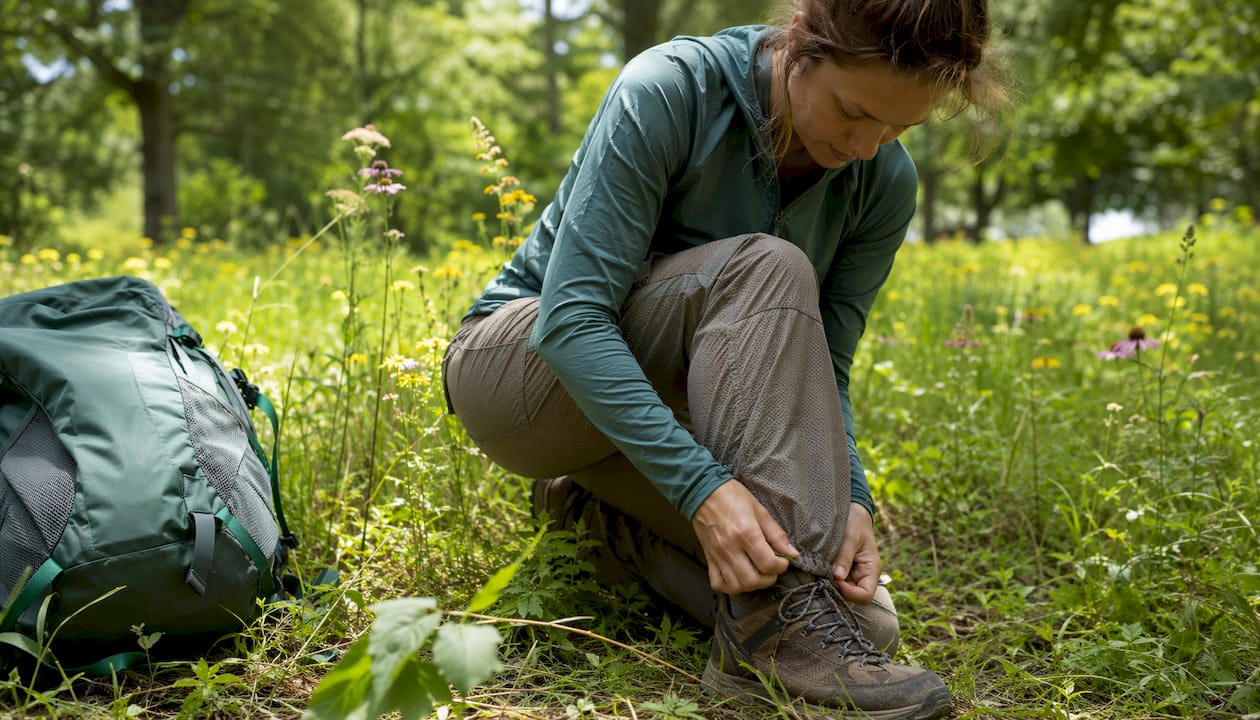
Pro Tip: Lighter outer layers in breathable mesh worn over a base layer give you two barriers at the ankle and wrist without overheating. The outer layer catches mites before they reach skin; the inner layer is your backup.
Fit and sealing
A complete ankle seal matters more than simply tucking pants into socks. Texas A&M AgriLife Extension notes that chiggers climb upward from the ground and can exploit any gap at the ankle. Elastic-cuffed pants, gaiters worn over boot tops, or pants with integrated foot coverage all close that gap more reliably than a loose tuck.
Clothing-first vs. treated clothing: Chemical-free mesh clothing provides immediate protection the moment you put it on, with no reapplication and no waiting for a treatment to dry. Permethrin-treated clothing offers residual repellency that persists through multiple washes, but requires careful application and must never contact skin directly. Both approaches work; the choice comes down to whether you want zero chemicals in the equation.
Features worth looking for
When shopping for chigger protection, prioritize: integrated foot coverage or ankle seals, elastic or adjustable cuffs, machine-washable fabric, and sizing that covers kids as well as adults. For families with children, UV-protective rash suits follow the same barrier logic and are worth considering for younger kids in high-exposure settings.
Bugawaygear’s mesh pants and jackets are built around exactly these features: ultra-fine breathable mesh, sealed ankles, and dryer-safe construction that holds up to the hot-cycle laundry routine described above.
Simple yard and pet steps that reduce chigger habitat
You cannot eliminate chiggers from your property, but you can make it less hospitable.
- Mow regularly and trim edges. Short grass dries faster and exposes mites to lethal heat and sunlight.
- Clear leaf litter and brush piles. These are prime overwintering and resting habitat.
- Create a dry buffer zone between wooded or weedy areas and the spaces where kids and pets play.
- Keep pets out of tall grass during peak season. Dogs and cats carry chiggers back into the home on their fur.
- Check and wash pet bedding after any outdoor excursion into high-risk areas.
- Use insecticides as a last resort. Bifenthrin and other labeled yard treatments can reduce populations in targeted areas, but follow product labels precisely and keep pets and children off treated surfaces until dry.
What to do if you think you’ve been bitten
Immediate steps
Shower as soon as possible and scrub with soap and a washcloth. The goal is physical removal of any larvae still on skin. Bag and hot-dry your clothing before washing. Skip the folk remedies: nail polish, bleach, and oils do not kill or remove chiggers and can irritate already-inflamed skin, as both AgriLife Today and StatPearls confirm.
Symptom relief
StatPearls (NCBI) recommends supportive care: topical corticosteroids (hydrocortisone cream), oral antihistamines, and cold compresses to manage itch and inflammation. Over-the-counter calamine lotion is also a reasonable option for mild cases.
| Symptom stage | What to expect | Recommended action |
|---|---|---|
| — | Little to no itch yet | Shower, scrub, hot-dry clothing |
| — | Itch intensifies, red welts appear | Hydrocortisone cream, antihistamine, cold compress |
| 1–3 days | Peak itch; welts may blister | Continue topical treatment; avoid scratching |
| 3 days | Gradual resolution | Keep skin clean; trim nails to prevent secondary infection |
| Beyond 2 weeks or worsening | Possible secondary infection | See a clinician |
Red flags: Seek medical attention if bites show signs of infection (spreading redness, warmth, pus) or if you experience a severe allergic reaction. StatPearls notes these complications are rare but warrant professional assessment.
Common myths that can make things worse
Myth: Chiggers burrow into your skin. They do not. They feed at the surface and typically detach within a few hours, often before you even notice the bite.
Myth: Nail polish or bleach will suffocate or kill the mite. By the time you feel the itch, the larva has usually already left. These remedies treat a mite that is no longer there and can worsen skin irritation.
Myth: U.S. chiggers spread disease. UCLA Health is clear on this: American chiggers do not transmit diseases to humans. (Scrub typhus, caused by a related mite species, is a concern in parts of Asia and the Pacific but not in the continental U.S.)
Safety notes on repellents
DEET applied to skin is an effective repellent against chiggers. StatPearls classifies it as highly effective. Permethrin works well on clothing but must never be applied directly to skin; apply it to garments, let them dry completely, then wear them. If you prefer to skip both chemicals entirely, a well-sealed clothing barrier is your most reliable alternative.
This article is general information, not medical advice. Confirm current treatment guidance with a qualified clinician or your primary care provider for your specific situation.
Key Takeaways
A clothing-first physical barrier, combined with an immediate post-exposure shower and hot dryer cycle, is the most reliable chemical-free strategy for chigger bite prevention.
| Point | Details |
|---|---|
| Seal ankles and cuffs | Elastic cuffs, gaiters, or integrated foot coverage block the upward-climbing path chiggers use. |
| Hot dryer after every outing | High-heat tumble drying kills chiggers on fabric; washing alone may not be sufficient. |
| Shower and scrub immediately | Vigorous scrubbing with soap and a washcloth removes larvae before more bites occur. |
| U.S. chiggers carry no disease | Prevention is about comfort; focus on barrier methods and symptom relief, not disease risk. |
| Bugawaygear for chemical-free coverage | Bugawaygear’s ultra-fine mesh pants and jackets provide sealed-ankle, dryer-safe protection with zero chemicals. |
Why clothing-first protection is the right call
The conventional advice on chigger prevention tends to jump straight to repellents. DEET works, permethrin works, and nobody is arguing otherwise. But for families with young kids, gardeners who are outside every day, and hikers who spend hours in the field, the question of daily chemical exposure adds up fast. A repellent you have to reapply every few hours, keep away from children’s hands, and store carefully is a friction point that leads people to skip it on the exact days they need it most.
Clothing does not expire mid-hike. It does not wash off in sweat. A well-sealed ankle cuff works at hour one and hour six equally well. The research from Texas A&M AgriLife Extension and UCLA Health consistently points to barrier methods as the foundation of prevention, with repellents as a supplement. That hierarchy makes sense: block contact first, then add chemistry if you want extra coverage.
The one thing most guides understate is how much fit matters. A loose tuck at the ankle is not a seal. Chiggers are small enough to exploit a half-inch gap. That is why integrated ankle coverage and elastic cuffs are not just comfort features; they are the functional core of what makes protective clothing actually work.
Zero-chemical protection that actually fits the way you move
If you have read this far, you already know the strategy: seal the ankles, cover the skin, hit the dryer when you get home. The missing piece for most families is clothing that makes that strategy easy to follow every single time.

Bugawaygear builds lightweight mesh pants and jackets specifically around the chigger-prevention checklist above: ultra-fine breathable mesh that physically blocks larvae, integrated ankle seals that close the gap chiggers climb through, and dryer-safe construction so the hot-cycle laundry step is never a problem. Every piece is made from 100% chemical-free materials, sized for adults and kids, and backed by a 30-day money-back guarantee. Over 500 customers report zero tick and insect bites while wearing them.
Ready to gear up before your next hike or garden session? Browse the Bug Away Pants for Men or explore the full Bugawaygear collection to find the right fit for your family.
Useful sources
- Texas A&M AgriLife Extension — Chiggers: Comprehensive extension guide covering chigger biology, habitats, prevention, and yard management.
- AgriLife Today — Chigger season tips to beat the itch: Expert commentary from Texas A&M entomologist Bryant McDowell on seasonality, behavior, and post-exposure steps.
- UCLA Health — Strategies for keeping chiggers at bay: Clinical perspective on U.S. chigger disease status, heat-based clothing treatment, and symptom management.
- StatPearls (NCBI) — Chigger Bites and Trombiculiasis: Clinical reference covering DEET and permethrin efficacy, supportive care protocols, and complication guidance.
- Cleveland Clinic — Chigger Bites: Patient-facing overview of symptoms, treatment options, and prevention clothing recommendations.