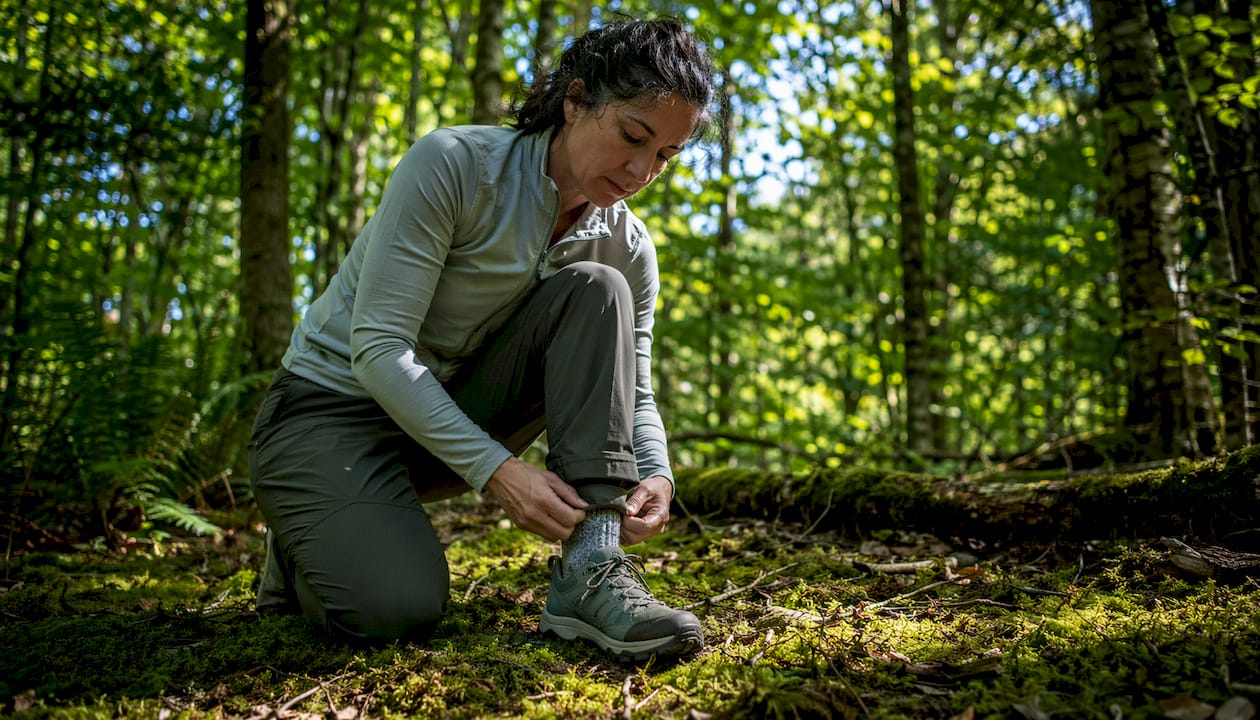
Tucking pants into socks is the most reliable physical barrier against ticks and crawling insects during outdoor activities. The technique works by sealing the gap between your pant hem and skin, cutting off the route ticks use to reach your legs. Done correctly, this method requires no chemicals, no sprays, and no special treatments. Outdoor safety organizations recommend it as a foundational layer of tick defense, particularly in wooded or grassy terrain where tick exposure is highest. Getting the steps right makes the difference between a seal that holds all day and one that fails within the first mile.
Why tucking pants into socks works as a tick barrier
The sock-over-pant method creates a physical barrier against ticks by closing the entry point crawling insects rely on most. Ticks do not jump or fly. They crawl upward from ground level, which means the ankle and lower leg are the primary access points. A properly executed tuck eliminates that route entirely.
The technique is borrowed directly from military field practice, where “blousing” pants over boots has been standard procedure for decades. Field practitioners use blousing techniques and select boot types that provide a tight seal over the sock-pant interface to maximize protection. The same logic applies to hikers, gardeners, and anyone spending time in tick-heavy environments across the United States.
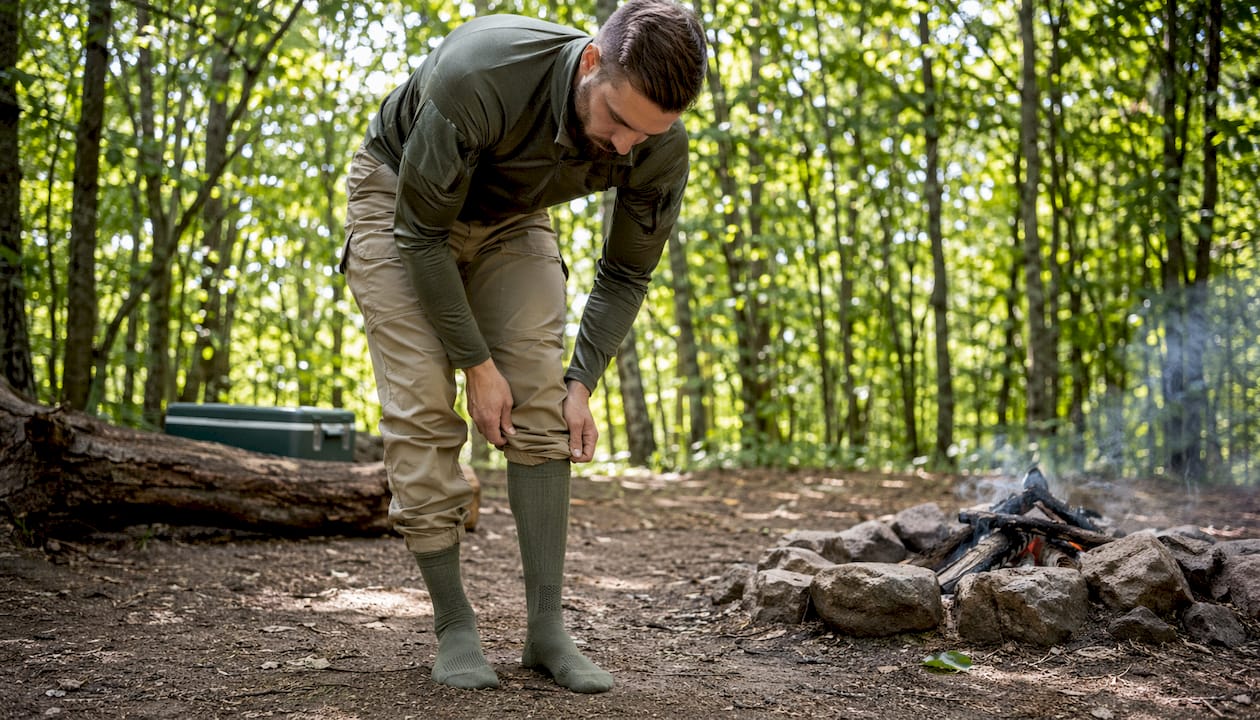
What makes this method effective is mechanical security, not just the act of tucking. The sock must sit over the folded pant hem, not under it. That single distinction separates a barrier that holds through hours of movement from one that collapses after ten minutes on the trail.
What gear do you need before you start?
The right clothing makes this technique work. The wrong gear makes it fail before you reach the trailhead.
Pants
Fitted or tapered hiking pants work best. Tactical pants with a slightly tapered leg create less bulk at the ankle, which makes folding cleaner and the sock seal tighter. Wide-leg or flared pants generate too much excess fabric, which bunches under the sock and creates pressure points. Lightweight nylon or polyester blends hold their shape better than cotton when compressed under a sock.
Socks
Tall, moisture-wicking socks are non-negotiable. The sock must reach at least mid-calf to cover the folded pant hem fully. Elasticity matters just as much as height. If the sock lacks elastic tension, it will slip down during movement and break the seal. Socks designed for tactical or hiking use combine breathability, height, and grip, making them the right choice for extended outdoor wear. Moisture-wicking fabric also reduces foot odor and keeps the foot comfortable under boots for hours at a time.
Boots
Boots complete the system. Tightly laced or zipped boots over the sock-pant junction provide the final seal that prevents tick ingress. Without a secured boot covering the interface, even a perfect tuck remains vulnerable. Mid-height or tall hiking boots work better than low-cut trail runners for this purpose.
| Gear item | Key feature | Why it matters |
|---|---|---|
| Hiking or tactical pants | Tapered or fitted leg | Reduces bulk at the ankle for a clean fold |
| Tall elastic socks | Mid-calf height, moisture-wicking | Covers the fold and maintains seal during movement |
| Mid or tall boots | Lace-up or zip closure | Locks the sock-pant interface in place |
| Elastic bands (optional) | Adjustable tension | Adds extra hold if sock elasticity is insufficient |
Pro Tip: Elastic bands are optional if your sock and pant fit is already snug, but they add useful backup tension on long hikes where socks tend to stretch and slip.
How to properly tuck pants into socks: step by step
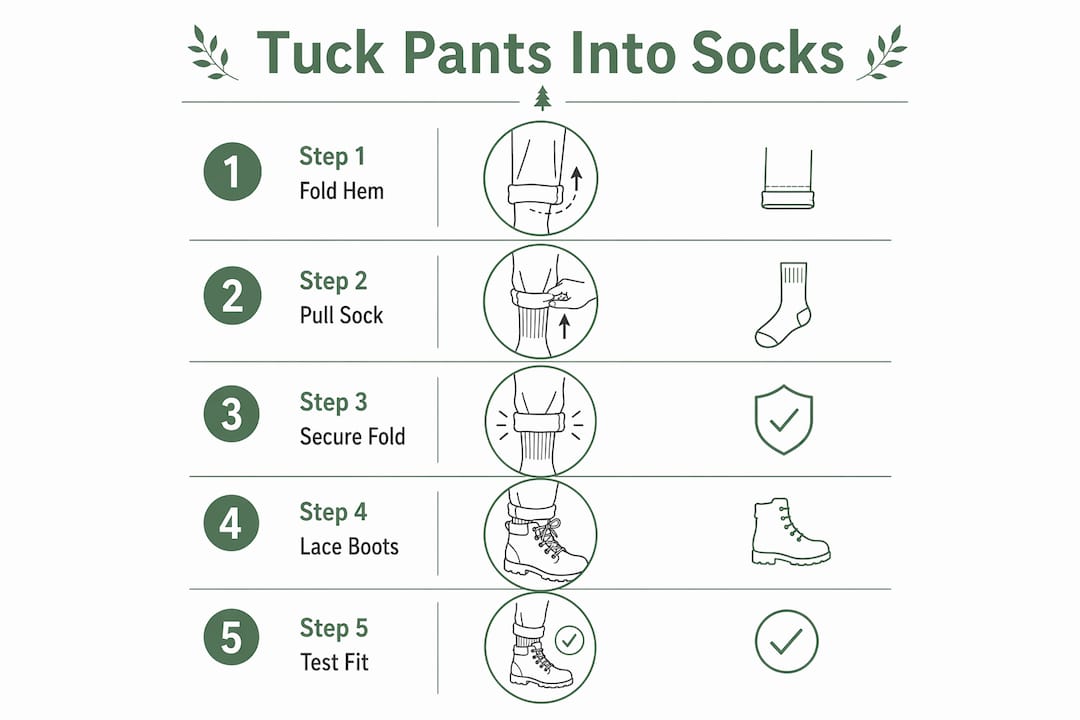
The most secure tucking method folds excess pant fabric neatly against the leg, pulls a tall sock firmly over the fold, and then secures everything with boots. Each step builds on the last.
-
Fold the pant hem. Gather any excess fabric at the ankle and fold it flat against your leg. The fold should sit flush against the skin with no loose loops or wrinkles. A neat fold prevents gaps where insects could enter and reduces the bulk that causes discomfort during movement.
-
Hold the fold in place. Use one hand to press the folded fabric against your leg. Keep it flat and tight. This step is where most people lose control of the tuck before the sock goes on.
-
Pull the sock up firmly over the fold. With your free hand, pull the sock up from the ankle, stretching it over the folded pant hem. The sock should cover the entire fold with no pant fabric visible below the sock’s top edge. The sock goes over the pants, not the other way around.
-
Check the fit. Run your fingers around the sock’s top edge to confirm there are no gaps or bunched fabric underneath. The sock should feel snug but not painful. If you feel a pressure point, smooth out the fold before continuing.
-
Put on your boots. Lace or zip your boots firmly over the sock. The boot should compress the sock-pant junction slightly, locking everything in place. This final step is what converts a good tuck into a sealed barrier.
| Step | Action | Goal |
|---|---|---|
| 1 | Fold pant hem flat against leg | Eliminate bulk and gaps |
| 2 | Hold fold with one hand | Keep fabric flat before sock goes on |
| 3 | Pull sock over fold | Cover the hem completely |
| 4 | Check fit around sock edge | Confirm no gaps or pressure points |
| 5 | Lace boots over sock | Lock the sock-pant interface |
Pro Tip: After completing all five steps, take ten steps and crouch down once. If the sock slips or the fold shifts, adjust before you hit the trail. Catching fit issues early prevents hours of discomfort and a compromised barrier.
Common mistakes that break the tick barrier
Most people who abandon this technique do so because of discomfort, not because the method failed. The discomfort almost always traces back to one of a handful of fixable errors.
The most common mistake is pushing pants into socks without folding first. Simply shoving pants into socks creates fabric bunching that causes pressure points and breaks the seal within minutes of movement. The sock ends up sitting over a lumpy mass of fabric rather than a flat, controlled fold. That bulk is what drives people to pull their pants back out by the second mile.
Short socks are the second most common problem. A sock that ends at the ankle cannot cover the folded pant hem. The fold sits exposed, the sock slides down, and the barrier disappears. Only mid-calf or taller socks create enough coverage to make the technique work.
Neglecting boots is the third error. Outdoor enthusiasts sometimes complete a solid tuck and then wear low-cut shoes or trail runners. Without a boot compressing the sock-pant junction, the seal loosens with every step.
Here are the most common issues and how to fix them:
- Sock slipping down: Switch to a taller sock with stronger elastic. Add an elastic band above the sock’s top edge as a backup.
- Fabric bunching under the sock: Re-fold the pant hem more carefully. Use thinner pants or roll the cuff tighter before pulling the sock up.
- Gaps at the top of the sock: Pull the sock higher and check that the fold is fully covered. The sock’s top edge should sit at least one inch above the pant fold.
- Pressure or chafing after an hour: The fold is too thick. Reduce the number of layers in the cuff and smooth the fabric flat before re-tucking.
- Tuck collapsing during steep terrain: Lace boots tighter at the ankle to compress the junction more firmly.
Pro Tip: For hot-weather hikes, choose a thin merino wool or synthetic blend sock. These materials wick moisture better than cotton and maintain their elastic tension longer, which keeps the seal intact through sweat and movement.
How does this technique fit into a full tick prevention plan?
Tucking pants into socks is the foundation of physical tick defense, but it works best as part of a layered approach. Multi-layered tick prevention significantly reduces the risk of tick bites during outdoor activities, and the pant tuck is the layer that closes the most common entry point.
Complementary measures that strengthen the overall defense include:
- Applying EPA-registered tick repellents such as DEET or picaridin to exposed skin and clothing before heading out.
- Wearing permethrin-treated clothing on the upper body to repel ticks that reach higher than the boot line.
- Performing a full-body tick check within two hours of returning indoors, paying close attention to the scalp, behind the knees, and around the waistband.
- Showering within two hours of outdoor activity, which removes unattached ticks before they can bite.
- Wearing light-colored clothing so ticks are easier to spot before they reach skin.
The pant tuck handles the ankle and lower leg. Repellents and treated clothing handle the rest of the body. Tick checks catch anything that made it through. No single measure covers every scenario, but combining them creates a defense that is genuinely difficult for ticks to penetrate.
Clothing designed specifically for tick protection adds another layer. Bugawaygear produces lightweight, mesh garments built as physical barriers against ticks and insects, with no chemical treatments involved. Pairing that kind of purpose-built clothing with a solid tucking technique gives outdoor enthusiasts the most complete physical defense available.
Key takeaways
Tucking pants into socks creates a lasting tick barrier only when the pant hem is folded flat, the sock is pulled firmly over the fold, and boots lock the junction in place.
| Point | Details |
|---|---|
| Fold before you tuck | Always fold the pant hem flat against the leg before pulling the sock up. |
| Sock height is non-negotiable | Use mid-calf or taller elastic socks to fully cover the folded hem. |
| Boots complete the seal | Lace or zip boots firmly over the sock-pant junction to lock the barrier. |
| Test before the trail | Walk and crouch after tucking to confirm fit before extended activity. |
| Layer your defenses | Combine tucking with repellents and tick checks for the strongest protection. |
What I’ve learned from years of tucking on the trail
The first time I tried this technique, I did it wrong. I shoved my pants into my socks, pulled on my boots, and felt confident for about twenty minutes. By the time I reached the first ridge, the fabric had bunched into a knot above my ankle and I had already untucked everything out of frustration.
What changed my approach was learning that the fold comes first. Once I started cuffing the pant hem flat before the sock went on, the whole system clicked. The sock sat cleanly, the boot held it in place, and I stopped thinking about my ankles entirely. That is the goal: a tuck you forget about because it just works.
Boot selection matters more than most outdoor enthusiasts realize. I have worn the same tuck with two different boot types on the same trail and felt a completely different result. A boot with a firm ankle collar and tight lacing compresses the junction in a way that a loose trail runner simply cannot replicate. If your tuck keeps failing, check your boots before you blame your socks.
The technique does take a few practice runs to feel natural. The first time feels fussy. By the fifth time, it takes under a minute and becomes as automatic as tying your laces. Stick with it through the learning curve. The protection it provides is worth every second of that initial awkwardness.
— Thomas
Bugawaygear pants: built for the tuck

A solid tucking technique works even better when your pants are designed for it. Bugawaygear makes lightweight, chemical-free pants built specifically to block ticks and insects through physical barrier design. The tapered leg fits cleanly into tall socks without excess bulk, which makes the folding step faster and the seal tighter. Over 500 customers report zero tick bites while wearing Bugawaygear in the field. The pants come with a 30-day money-back guarantee, so the risk of trying them is low. Check out the Bug Away Pants for men or the Bug Away Pants for women and pair them with the tucking method covered here.
FAQ
Why do you tuck pants into socks for tick protection?
Ticks crawl upward from ground level, making the ankle and lower leg the primary entry point. Tucking pants into socks closes that gap with a physical barrier that requires no chemicals.
What socks work best for tucking pants?
Mid-calf or taller socks with strong elastic and moisture-wicking fabric work best. Short or low-elasticity socks slip during movement and break the seal.
Does the boot matter when tucking pants into socks?
Yes. Tightly laced boots over the sock-pant junction lock the barrier in place. Without a boot compressing the interface, even a well-executed tuck loosens with movement.
What is the most common mistake when tucking pants into socks?
Pushing pants into socks without folding the hem first. This creates fabric bunching that breaks the seal and causes enough discomfort to make most people abandon the method entirely.
How do I keep the tuck from slipping during a long hike?
Use taller socks with strong elastic, lace your boots firmly at the ankle, and add an elastic band above the sock’s top edge if needed. Test the fit before the hike by walking and crouching.