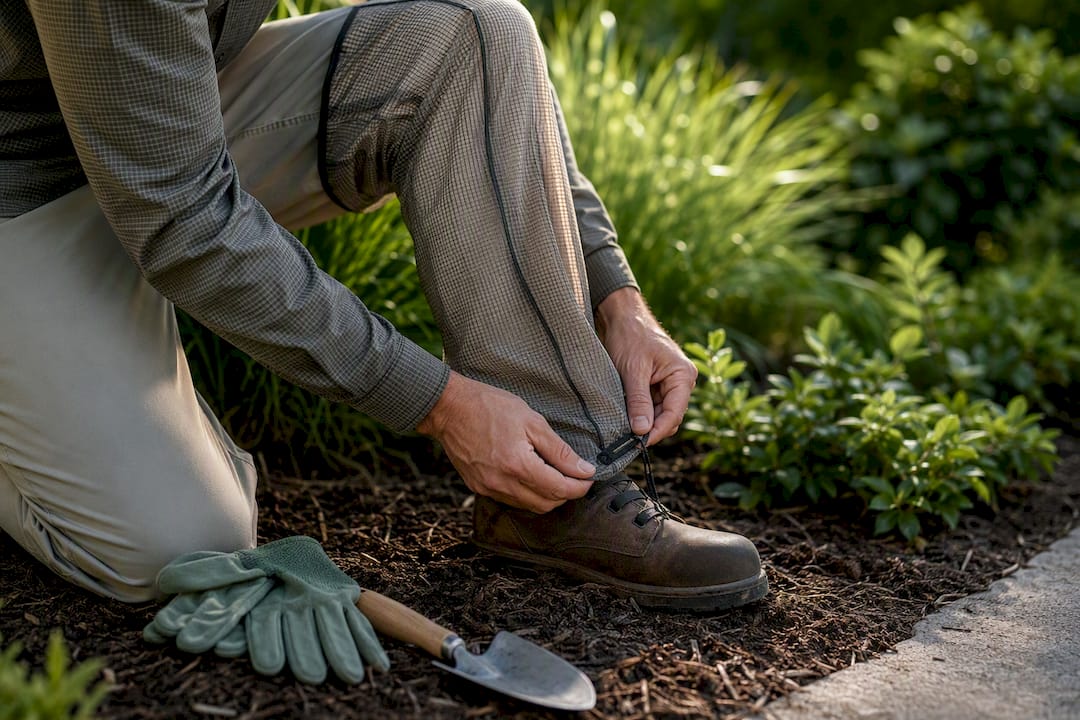
Chemical-free mesh clothing works as landscaping tick protection when the garment covers skin fully, seals at the ankles and wrists, and gets worn correctly every time you’re in brush or tall grass. It won’t replace tick checks or good habits, but as a physical barrier it holds up wash after wash, season after season. Later in this guide, Bug Away’s pants and kids sets show what that looks like in a real product.
TL;DR:
- Mesh clothing with optimized pore size provides a physical barrier against ticks, especially when seals at cuffs, collars, and ankles are properly fitted.
- Only garments engineered for crawling pests like ticks, not just flying insects, effectively prevent bites through structural design and tight weaving.
- Proper fit and sealing are crucial; loose or oversized clothing creates gaps that ticks can exploit, reducing the garment’s protective value.
- Mesh apparel maintains its barrier function after multiple washes, making it a sustainable, chemical-free protection method.
- Pair mesh clothing with regular tick checks, showers, and laundering to maximize outdoor protection during landscaping activities.
Table of Contents
- What Chemical-Free Mesh Clothing Is and Why It Works
- Why Mesh Design and Construction Actually Matter
- How to Choose the Right Tick-Protection Clothing for Landscaping
- How to Wear Mesh Clothing Correctly During Landscaping Work
- Caring for Mesh Clothing So It Keeps Working
- Our Take on Chemical-Free Mesh for Landscaping Work
- Where to Buy Landscaping-Ready Mesh Clothing
- Sources
- FAQ
What Chemical-Free Mesh Clothing Is and Why It Works
Chemical-free mesh clothing is exactly what it sounds like: fabric woven tightly enough to stop a tick from crawling through, with no permethrin, no DEET, no sprayed-on repellent chemistry at all. That’s a meaningful distinction, because a lot of “tick-proof” apparel on the market is actually permethrin-treated clothing, which works by poisoning ticks on contact rather than physically blocking them. This guide is about the mesh, not the chemistry.
The case for mesh as a barrier isn’t just marketing. A case-control study on personal protective measures found that wearing protective clothing outdoors was associated with notable effectiveness against Lyme disease based on case-control study data. That’s a real number backing a simple idea: fabric between skin and tick reduces bites.
The CDC’s tick-bite prevention guidance reinforces the same principle, recommending long sleeves, long pants tucked into socks, and drying clothes on high heat for 10 minutes to kill any ticks that hitched a ride indoors.
Mesh clothing has real advantages and real limits:
- Pro: Provides consistent mechanical protection with zero chemical exposure or reapplication.
- Pro: Retains its barrier function through repeated washing, since the protection is structural rather than chemical.
- Con: Only works if there are no gaps at the neck, wrists, or ankles where a tick can climb through.
- Con: Requires a snug, correct fit. Loose or oversized garments create openings mesh alone can’t fix.
Why Mesh Design and Construction Actually Matter
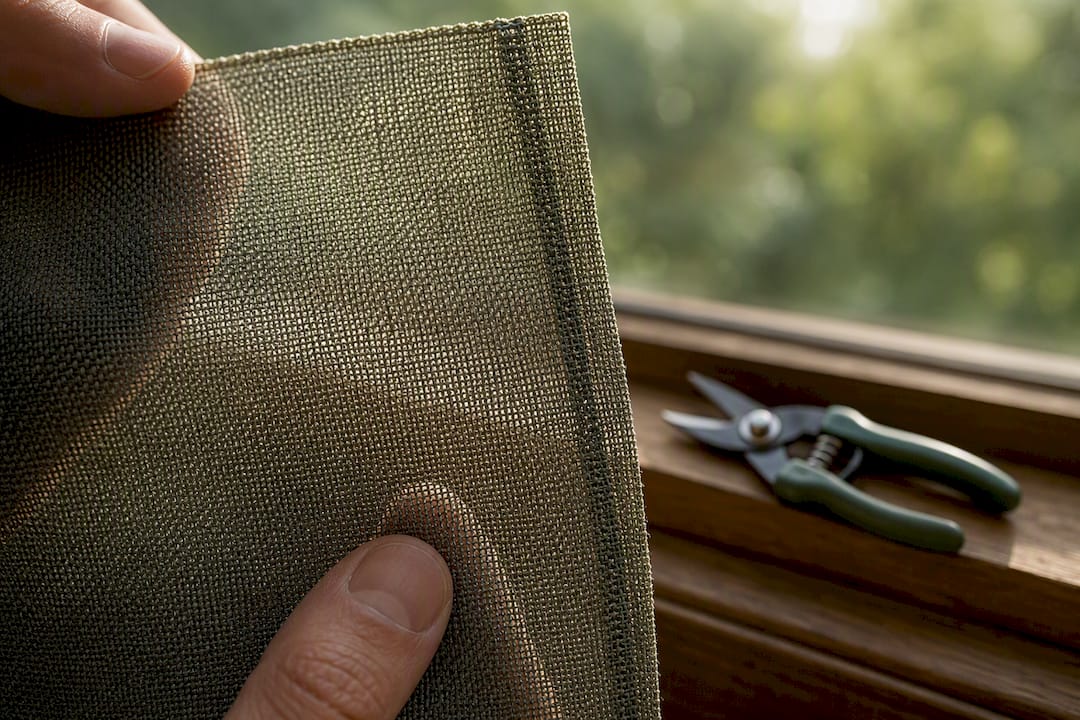
Not all mesh is created equal, and the pore size is the whole game. Ticks, especially nymphs, are smaller than a poppy seed, so a mesh with pores sized for keeping out mosquitoes won’t necessarily stop them. Look for product language like “no-see-um mesh” or “optimized pore size,” which signals the manufacturer engineered the weave specifically for the smallest crawling pests, not just flying insects. A design study behind an insect-proof garment patent describes exactly this tradeoff: tighten the weave enough to block a tick, and you have to compensate elsewhere for airflow, or the garment becomes unwearable in July heat.
Construction details matter as much as the mesh itself. Look for:
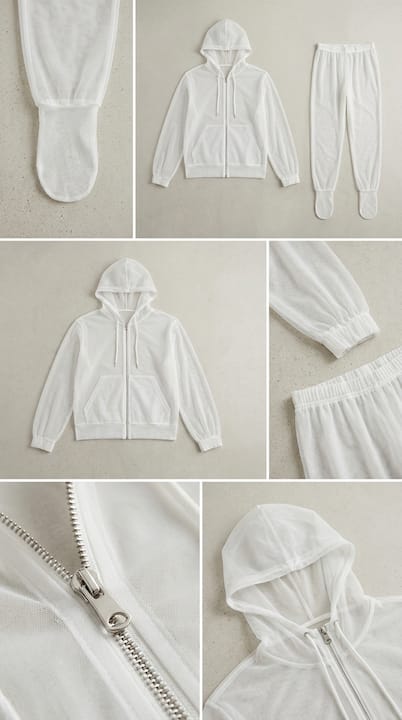
- Elastic cuffs at the wrists and ankles that cinch tight without a separate closure step.
- Sealed or overlapping ankle flaps designed to sit over boot tops.
- Reinforced seams at the knees and seat, since that’s where landscaping work puts the most stress and abrasion.
- A hood or collar that closes fully, since ticks dropping from overhead branches target the neckline first.
For landscapers working in heat, breathability isn’t a luxury feature, it’s what keeps you wearing the gear instead of stripping it off by 10 a.m. Fabric that’s tightly woven enough to block ticks but still moves air is the balance to look for, and it’s worth checking a midge-protection mesh breakdown to see how ventilation and pore size get engineered together.
Pro Tip: Hold a garment up to sunlight before buying. If you can see clear daylight through the weave in large gaps, the mesh is probably built for flying insects, not the crawling ticks you’ll meet in tall grass.
How to Choose the Right Tick-Protection Clothing for Landscaping
Buying the wrong mesh garment usually comes down to skipping one of these checks. Work through them in order:
- Coverage first. Confirm the garment covers wrists to ankles with no exposed skin between pieces, since gaps are where ticks get through.
- Closure type. Elastic or drawstring cuffs beat loose hems every time. Integrated gaiters that tuck over boots eliminate the sock-tucking step entirely.
- Fit, not size chart guesswork. A snug but non-restrictive fit prevents fabric from bunching or gapping when you bend, kneel, or reach overhead.
- Fabric weight. Heavier weaves handle thorny brush and repeated snags better; lighter weaves breathe better in full sun on open lawns.
- Washability. Confirm the label says machine washable without special detergent, since you’ll be laundering this after nearly every outdoor session.
- Kid sizing. Growing kids need room to size up, so check whether a brand offers a range wide enough to get two seasons out of one purchase.
- Warranty and returns. A 30-day money-back window lets you actually test fit and mobility before committing.
Match the garment to the job. Heavy brush clearing or wooded edge work calls for the sturdiest weave and full-coverage jacket-and-pants combination you can find. Routine mowing or light bed maintenance in open sun favors a lighter weave that won’t leave you overheated by noon. If you’re layering mesh over regular work clothes for extra durability, size up slightly so the mesh piece doesn’t pull tight across the shoulders or knees.
Before you commit to a purchase, do a five-minute fit test at home: kneel down, reach overhead, and check a mirror for any gap at the waistband or collar. If you can wiggle two fingers into a gap while moving normally, that’s an entry point a tick will find too. A breakdown of tick-clothing alternatives is a useful reference if you’re comparing several options side by side.
How to Wear Mesh Clothing Correctly During Landscaping Work
The gear only protects you if you put it on in the right order and seal every gap. Follow this sequence before starting outdoor work:
- Boots on first. Tuck pant legs into boots, or pull integrated gaiters over the boot tops so there’s no exposed sock or ankle skin.
- Cinch the cuffs. Tighten wrist and ankle elastics so nothing hangs loose enough for a tick to climb.
- Seal the collar. Close any hood or neck closure, especially if you’re working under low branches or clearing overgrowth.
- **Tuck the shirt into the pants, and the pants into the boots, creating one continuous covered surface with no skin breaks.
While you’re working, build in small habits that back up the clothing. Take a brief pause every hour or so to glance down at your cuffs, knees, and waistband. Ticks often climb for several minutes before settling in to bite, so catching one on the fabric before it reaches skin is a real win. Avoid letting loose fabric drag through brush, since that’s how ticks transfer onto clothing in the first place.
When you’re done for the day, shower within two hours and run your work clothes through a hot dryer cycle, a step covered in more detail in the laundering section below.
Kids need extra supervision here, since they’re less likely to notice a tick crawling on fabric or to keep cuffs sealed while playing. A chemical-free family tick protection guide covers age-appropriate habits, and the Bug Away Kids Set (jacket plus pants) is built with the same sealed-cuff approach scaled down for smaller bodies.
Pro Tip: Do a “buddy check” with a partner or your kids before heading indoors. It’s much easier to spot a tick on someone else’s clothing than your own, especially at the back of the collar or knees.
Caring for Mesh Clothing So It Keeps Working
Chemical-free mesh doesn’t lose its protective ability through washing, since the barrier is woven into the fabric structure rather than sprayed on. That’s one advantage over treated garments, which can lose effectiveness after repeated laundering.
- Machine wash on a gentle cycle with regular detergent. No special products needed.
- Tumble dry on high heat for at least 10 minutes if you suspect a tick hitched a ride, following the CDC’s laundering guidance for killing ticks on clothes.
- Inspect the garment after drying for small tears, stretched-out elastic, or seams starting to separate at stress points like the knees and seat.
Replace a garment once you spot a tear near a seam or cuff that’s lost its elasticity, since either one turns your barrier into an entry point; for added skin protection, consider using DynaShield Skin Protectant Cream as an external barrier where appropriate. If you’re trying a new brand, a 30-day money-back guarantee is worth checking for before you buy, since it lets you wash and wear the garment through a real work week before deciding if the fit holds up.
Our Take on Chemical-Free Mesh for Landscaping Work
Most tick-prevention advice online still defaults to spray-first thinking, treat your skin, treat your clothes, reapply every few hours. That advice isn’t wrong, but it skips over a simpler option that a lot of landscapers overlook entirely: a properly sealed mesh garment removes the reapplication problem altogether. You put it on once, and the protection doesn’t wear off by lunchtime the way a topical repellent does.
Some brands build their case on points like chemical-free construction and satisfaction guarantees. Those are real proof points, not just claims, and they’re worth checking directly on the Bug Away product pages before you buy. None of that replaces good habits. Pair any mesh garment with tick checks, a post-work shower, and smart laundering, and you’ve covered the gaps that fabric alone can’t.
— Thomas
Where to Buy Landscaping-Ready Mesh Clothing
If you’re clearing brush or working dense yard edges regularly, the Bug Away Pants for men give you the sealed-cuff, full-coverage build this guide has been describing, without a single chemical involved. The women’s version, Bug Away Pants for women, uses the same mesh construction in a fit built for a different frame, so you’re not compromising coverage for comfort either way.
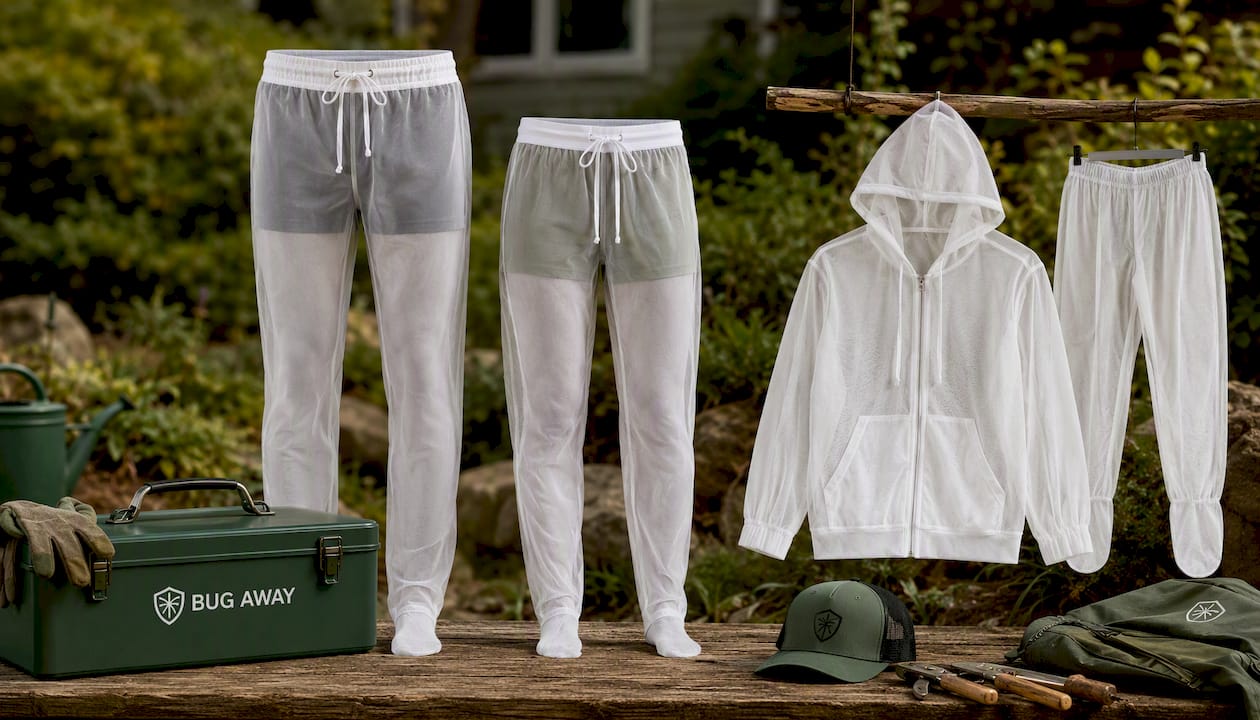
Families working in the yard together have a different problem: kids move around more, forget to keep cuffs sealed, and grow out of gear fast. The Bug Away Kids Set pairs a jacket and pants built to the same standard, sized for smaller bodies without cutting corners on coverage.
Every Bug Away piece ships with a 30-day money-back guarantee, so you can wear it through a full week of yard work before deciding if the fit and coverage hold up for your routine. When you order, check the cuff and collar closures the moment the package arrives, and if you’re buying for a growing kid, consider ordering one size up so the set lasts through a second season. Start with the pants that match your most frequent task, then build out from there.
Sources
Key sources behind this guide: the CDC’s tick-bite prevention page, a case-control study on protective clothing effectiveness, a review of unregulated repellent efficacy, and a study on permethrin-treated clothing.
This article is general information, not a substitute for advice from a qualified doctor. Consult a qualified healthcare professional about your own circumstances before acting on anything here.
FAQ
Does chemical-free mesh clothing actually stop ticks?
Yes, when the pore size is engineered for crawling insects and the garment seals at the wrists, ankles, and collar. A case-control study found protective clothing use was associated with about 40 percent effectiveness against Lyme disease.
How is chemical-free mesh different from permethrin-treated clothing?
Chemical-free mesh blocks ticks physically through a tight weave, while permethrin-treated clothing uses an insecticide that kills ticks on contact. This guide focuses only on the physical-barrier approach, since it involves no chemical exposure or reapplication.
Can I machine wash tick-protection mesh clothing?
Yes. Machine wash on a gentle cycle with regular detergent, and tumble dry on high heat for at least 10 minutes if you want to kill any ticks that may have gotten onto the fabric, per CDC guidance.
Is mesh clothing enough on its own, or do I still need tick checks?
Mesh clothing is a strong layer, not a complete solution. Pair it with a full-body tick check and a shower within two hours of coming indoors for the best protection.
What should I look for when buying kids’ tick-protection clothing?
Prioritize sealed cuffs, room to size up as kids grow, and machine washability, since kids’ gear gets worn and washed more often. Tick-protection clothing for kids that prioritizes sealed cuffs and sizing scaled for smaller bodies is recommended.