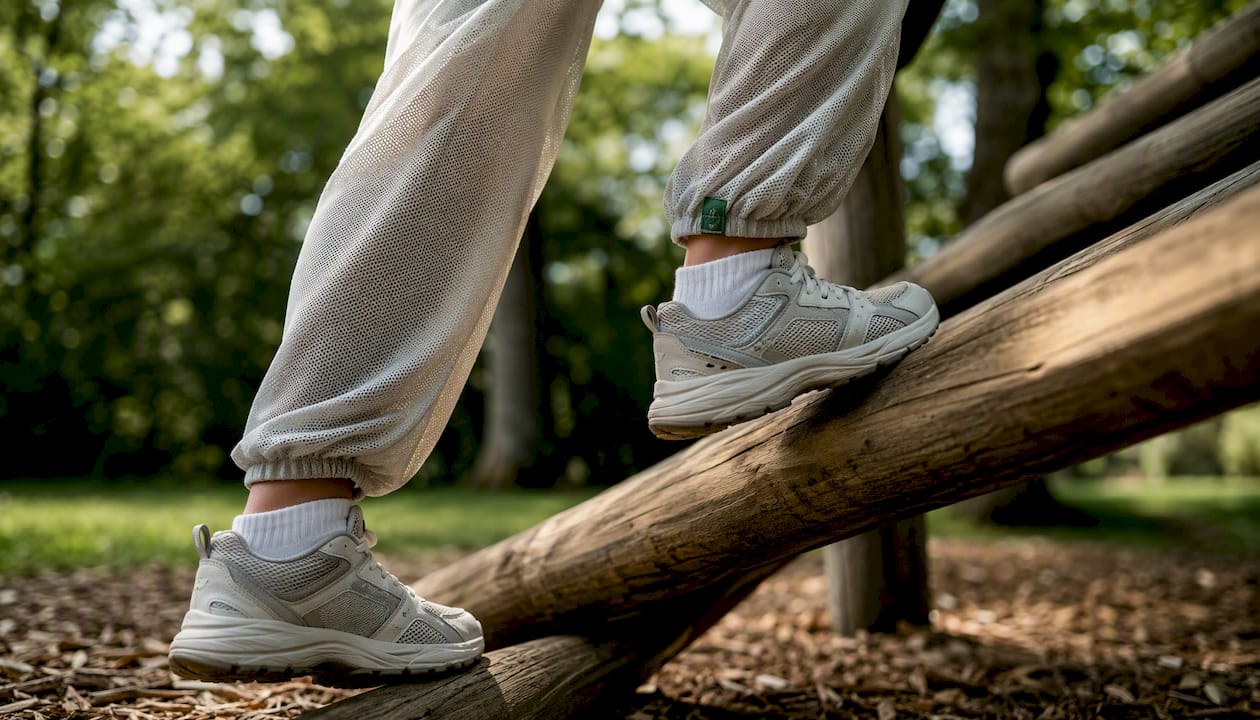
For playground tick protection, lightweight chemical-free mesh clothing that seals at the ankles, wrists, and waist beats sprays and treated fabric for most families. Pair it with a fast post-play routine: a quick tick check and ten minutes in a hot dryer. Permethrin-treated clothing works too, but it carries age caveats worth checking on the label first. For a quick, chemical-free option, Bug Away’s kids set covers the highest-risk zones without any insecticide involved.
TL;DR:
- Clothing with sealed ankles and wrists provides the most reliable physical barrier, especially for lower-leg protection, which is the primary tick entry point.
- Factory-treated permethrin clothing lasts for 40 to 70 washes, while spray-on treatments fade after only 2 to 6 washes, making clothing durability a key consideration.
- Mesh clothing offers a chemical-free alternative with no expiration, but its effectiveness depends on tight weave and proper fit to prevent ticks from crawling underneath.
- Regularly running clothing through a high-heat dryer for at least ten minutes after outdoor play significantly reduces the risk of tick hitchhiking.
- Site selection, such as avoiding shaded, moist, or brush-adjacent playgrounds, combined with comprehensive clothing coverage and tick checks, forms a holistic tick prevention strategy.
Table of Contents
- Why Clothing Matters for Playground Tick Protection
- Permethrin, Sprays, or Mesh: Which Protection Actually Holds Up?
- How to Dress a Child for the Playground, Step by Step
- Washing, Drying, and Age Limits You Shouldn’t Skip
- What to Look for When Buying Tick-Protection Clothing
- Bug Away: Where Chemical-Free Coverage Fits at the Playground
- What Most Tick-Prevention Advice Gets Backwards
- Where to Start Shopping for Playground-Ready Gear
- Sources
Why Clothing Matters for Playground Tick Protection
Ticks don’t drop from trees or jump. They climb. A tick sits on a blade of grass or a piece of leaf litter with its front legs stretched out, waiting for something warm to brush past, then grabs on and starts crawling upward. That means the lowest six to twelve inches of a child’s body, ankles, sneakers, sock line, takes the brunt of the exposure. Cornell’s school and childcare pest management program flags lower-leg coverage as the single highest protection priority for kids on playgrounds, yet most parents dress their kids top-down, worrying about jackets and hoodies while sneakers and ankle socks go uncovered.
Where the playground sits changes the math entirely. A play structure on a sunny lot with wood-chip or mulch surfacing carries a much lower tick load than one tucked against a tree line or bordered by unmowed grass. Forest edges and shaded, moist ground are where ticks thrive; open, dry, sunlit surfaces are hostile territory for them.
None of this means clothing alone solves the problem. It’s one layer in a stack that includes:
- Choosing playgrounds with sunny, dry, mulched surfaces over shaded or brush-adjacent ones
- Landscaping around home play areas to remove leaf litter and tall grass barriers
- Using repellents on exposed skin when appropriate for the child’s age
- Doing a full-body tick check after every outdoor play session
Skip the clothing layer and you’re relying entirely on the other three catching what gets through. Skip the site-selection piece and even the best-dressed kid is playing in a tick’s preferred habitat.
Permethrin, Sprays, or Mesh: Which Protection Actually Holds Up?
The three main options, permethrin-treated fabric, topical skin repellents, and physical-barrier mesh, protect differently, and picking the right one depends heavily on your child’s age and how often you’re doing laundry.
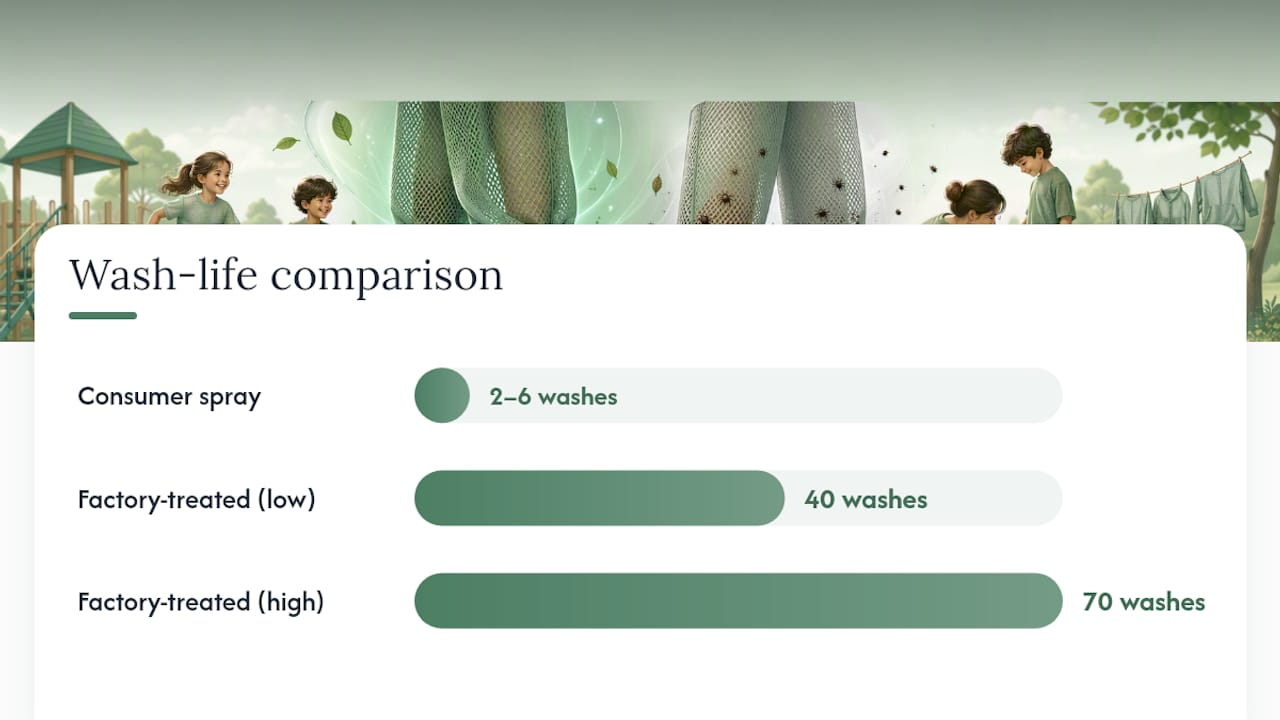
Factory-impregnated permethrin clothing is the most durable chemical option. Garments treated during manufacturing retain their tick-repelling effect through 40 to 70 washes, according to UF/IFAS Extension research. That’s roughly a season or two of regular wear before the treatment fades meaningfully. Consumer-applied permethrin sprays, the kind you buy at an outdoor store and spray on yourself, hold up far less well.
The wash-life gap is bigger than most parents assume: factory-treated permethrin clothing lasts 40 to 70 washes, while spray-on treatments applied at home typically last only 2 to 6 washings before you need to reapply.
Topical repellents applied to skin work differently than clothing treatments entirely, targeting exposed areas like hands, necks, and faces that clothing can’t cover. Products with roughly 20% picaridin perform comparably to 20% DEET against Ixodes ticks, the species responsible for most Lyme disease cases in the United States, per the University of Maine Cooperative Extension. But age restrictions matter here: DEET isn’t recommended for infants under two months, and many repellent formulations carry age restrictions excluding young children under three. Always check the label before applying anything to a toddler’s skin.
Physical-barrier mesh clothing sidesteps the chemical question altogether. There’s no insecticide to wash out, no age-restricted active ingredient, and no waiting period after application. That makes it a practical fit for families with very young children, kids with sensitive skin, or parents who’d simply rather not put a pesticide on laundry that gets washed every week. The tradeoff is coverage versus breathability: a mesh weave has to be tight enough to block a tick (which can be smaller than a sesame seed in its nymph stage) while staying loose enough that a kid will actually keep it on during a hot afternoon at the playground. Cheap mesh either fails on one end or the other.
Here’s how the three stack up at a glance:
- Factory permethrin clothing: long-lasting (40 to 70 washes), effective, but a chemical treatment with fabric-only labeling
- Spray-on permethrin: cheaper upfront, but needs reapplication every 2 to 6 washes
- Topical repellents: cover exposed skin only, age-restricted, need reapplication per label instructions
- Chemical-free mesh: no insecticide, no age restriction on the fabric itself, protection depends entirely on fit and weave quality
How to Dress a Child for the Playground, Step by Step
Getting dressed for the playground with tick protection in mind takes maybe two extra minutes once it’s a habit. Here’s the sequence that actually covers the gaps most parents miss.
- Start with full coverage basics. Long pants and long sleeves beat shorts and short sleeves every time, even in warm weather. Tuck the shirt into the pants and the pants into the socks to eliminate the gaps where ticks climb onto skin.
- Pick breathable materials over heavy ones, a key advice in safe baseball training practices to prevent youth injuries. A lightweight mesh fabric lets air through so kids don’t overheat, and layering a mesh jacket or pants over regular clothes adds a second physical barrier without the bulk of denim or fleece.
- Don’t forget feet and ankles. Closed-toe shoes with socks tucked over the pant cuff seal off the single highest-risk entry point. For toddlers who wriggle out of tucked socks in about four seconds flat, look for garments with built-in foot coverage that eliminates the tuck step entirely.
- Adjust for weather without cutting coverage. On hot days, swap heavy cotton for a lighter mesh weave rather than switching to shorts. Light colors also make it easier to spot a tick crawling on fabric before it ever reaches skin, a tip Harvard’s Lyme disease prevention guide backs up directly.
- Reserve topical repellent for exposed skin only, and only when the product label clears your child’s age. Hands, necks, and faces are the areas clothing can’t reach, so that’s where repellent picks up the slack, not as a substitute for covering the legs.
Pro Tip: Keep one “playground outfit” per kid pre-tucked and ready by the door. Mesh pants that already have sealed ankle cuffs remove the daily tucking battle entirely, which matters more than it sounds like at 8 a.m. on a school morning.
Washing, Drying, and Age Limits You Shouldn’t Skip
Clothing only protects as well as you maintain it, and the maintenance rules differ sharply depending on whether the fabric is chemically treated or a physical barrier.
If you’re using permethrin-treated clothing, the label matters more than intuition. Permethrin is formulated for fabric, not skin, and should never be applied directly to a child’s body. The wash-life gap covered earlier bears repeating in a safety context: factory-treated garments last 40 to 70 washes, while consumer spray treatments fade after 2 to 6, so mark a calendar or you’ll be relying on a treatment that’s already worn off without realizing it.
The CDC recommends running clothing through a dryer on high heat for at least ten minutes after any outdoor play session, regardless of what the clothing is made from. This one step matters because washing alone doesn’t reliably kill ticks. A tick can survive a cold or warm wash cycle; it usually can’t survive sustained dry heat. That makes the dryer, not the washing machine, the step that actually clears clothing of hitchhikers.
A few practical rules to keep straight:
- Check any permethrin product label for child age guidance before use; some formulations carry no minimum age for fabric-only treatment, but always confirm
- Run play clothes through a hot dryer cycle for 10+ minutes before rewashing, especially after playground visits near wooded edges
- Chemical-free mesh clothing has no wash-count expiration, since there’s no treatment to degrade, just check seams and cuffs for wear over time
- Talk to a pediatrician before using any topical repellent on a child under two, since most product labels don’t cover that age range at all
What to Look for When Buying Tick-Protection Clothing
Not all mesh garments protect equally, and the difference usually comes down to details you won’t notice until you’re already at the playground wishing you’d checked more carefully.
Weave and coverage design come first. Look for fine mesh specifically around the ankles, since that’s where ticks make first contact, along with cuffs that cinch or seal rather than gape open, and enough overlap at the waist and neckline that a shirt riding up doesn’t create a new entry point. A garment that looks protective folded on a hanger can still leave gaps once a kid is climbing on monkey bars.
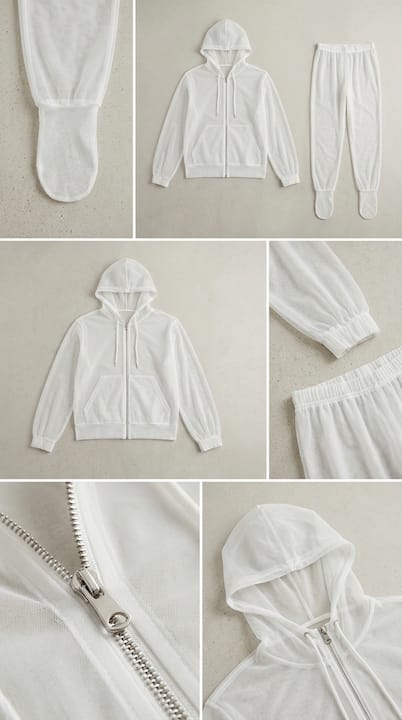
Breathability matters just as much as coverage, because a garment that isn’t worn correctly protects nobody. Kids move constantly at a playground, so articulated knees, stretch panels, and a genuinely lightweight weave make the difference between a garment a child tolerates and one that ends up stuffed in a backpack by 10 a.m.
Care and durability claims deserve scrutiny too:
- Clear wash-cycle ratings on the label (not vague marketing language) tell you what you’re actually buying
- A 30-day money-back guarantee signals a brand confident enough in fit and durability to stand behind it
- Customer reviews focused on real outdoor use, not just unboxing photos, tell you more than product copy ever will
- Sizing charts specific to kids’ measurements, not adult sizes scaled down, prevent the gapping that defeats the whole purpose
For deeper background on fabric choices, Bug Away’s guide on what to wear for ticks breaks down material tradeoffs across different outdoor activities.
Bug Away: Where Chemical-Free Coverage Fits at the Playground
Some brands build clothing around common coverage gaps parents encounter: ankle seals, kid-specific sizing, and a mesh weave fine enough to physically block ticks and mosquitoes without a single drop of insecticide. That matters most for families with toddlers, kids with sensitive skin, or anyone who’d rather not treat weekly laundry with a pesticide.
Some factors that support this approach include:
- A 30-day money-back guarantee on some orders
- Customer testimonials reporting zero tick bites while wearing the gear
- Materials built without chemical treatments, avoiding wash-count expiration
- Blog content covering practical prevention topics, including a step-by-step tick-check routine worth bookmarking
Sizing runs true to standard kids’ measurements, and the mesh weave aims to be tight enough for tick protection while staying breathable enough for typical playground activities, running, climbing, and getting dirty. For families already leaning chemical-free for other reasons, sunscreen choices, food, cleaning products, a mesh clothing barrier is simply the outdoor extension of that same decision. It won’t help with every insect, and it doesn’t replace a tick check, but as a daily layer for playground visits, it removes the chemical question from the equation entirely.
What Most Tick-Prevention Advice Gets Backwards
Most tick-prevention guidance still treats clothing as an afterthought behind sprays and yard chemicals, and that ordering has it backwards for playground use specifically. A playground isn’t a hiking trail through deep woods. It’s a bounded, usually maintained space where the exposure risk is concentrated almost entirely at ground level, ankles, sock lines, the hem of a pant leg. That’s a coverage problem, not primarily a chemistry problem, and coverage is what clothing solves best.
The conventional advice also underweights how often young kids’ clothes actually get worn and washed. A spray-on permethrin treatment that fades after a handful of washes sounds fine in theory and falls apart in practice once you’re doing laundry three times a week. A physical barrier with no wash-count expiration doesn’t have that failure mode.
Prioritize ankle and lower-leg coverage first, reserve topical repellent for the skin clothing can’t reach, and treat the ten-minute dryer cycle as non-optional. Get those three right and you’ve covered most of the real risk.
— Thomas
Where to Start Shopping for Playground-Ready Gear
Once you know what to look for, the actual shopping part should take five minutes, not an afternoon of comparing labels. Bug Away’s lineup covers the three situations most families need: outfitting the kids, and gearing up the adults who are chasing them around the playground.
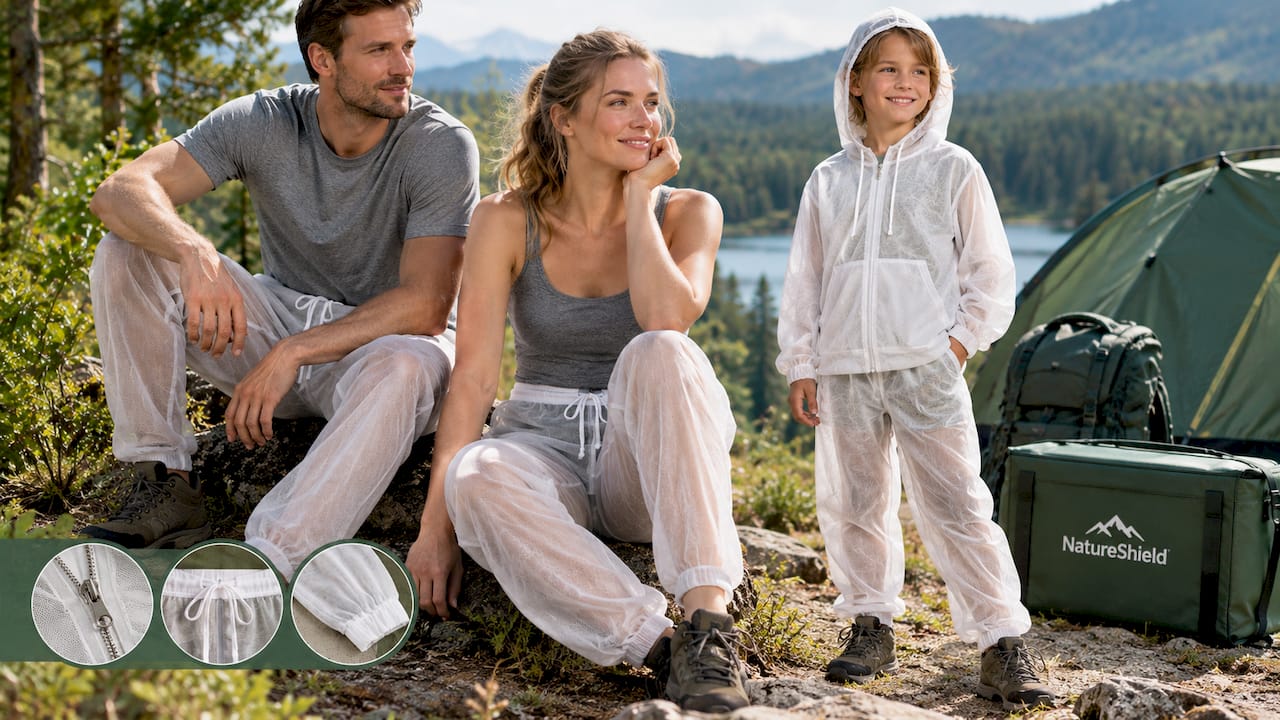
The Bug Away Kids Set pairs a mesh jacket with matching pants, sealed at the wrists, ankles, and waist, sized for active kids who climb, crawl, and generally treat playground equipment like an obstacle course. For moms who want the same chemical-free coverage on their own legs during park visits or gardening afterward, Bug Away Pants for Women offer the same fine-mesh barrier in adult sizing. Dads get the equivalent fit with Bug Away Pants for Men, built for the same ankle-to-waist coverage without the bulk of treated denim or the reapplication hassle of spray treatments.
Some orders carry a 30-day money-back guarantee, so if the fit isn’t right, sending it back may cost only a trip to the mailbox. Head to the full product lineup to check sizing charts before you buy.
Sources
The guidance in this article draws directly from public health and university research, not marketing claims. Worth reading directly if you want the full detail:
- UF/IFAS Extension - IN1467
- University of Maine Cooperative Extension - Personal protection
- Preventing Tick Bites | Ticks | CDC
- Cornell School & Childcare IPM - The ABCs of ticks on school and childcare grounds